Updated October 2026
Straight answer
Circuit breaker replacement in Boston is the fix when a breaker trips at normal loads, feels hot or won't reset, and the wiring behind it tests clean. The new breaker has to be a type the panel label lists, since a breaker that merely fits can grip the bus poorly. We test first, replace, then check the circuit under load.
Signs a breaker is wearing out
Trips at loads that used to be fine
The thermal trip has weakened with age.
Handle feels loose or will not latch
The internal mechanism has worn or broken.
Brown marks or a burnt smell at the panel
Heat at the terminal or the bus stab.
Breaker warm with little running
A loose connection is generating heat on its own.
Testing before the swap
Measure the load
We clamp the circuit under normal use to see whether it's overloaded or the breaker is weak.
Test the wiring
The circuit is disconnected and tested on its own for shorts and ground faults.
Inspect the panel
We check the bus stab, the panel label and neighboring breakers for heat.
Install the listed breaker
A breaker type the panel accepts goes in, with the terminal torqued to spec.
Retest and label
The circuit is tested under load and the panel directory is updated.
When the breaker is the part that failed
Breakers wear. Each one has a thermal element that bends with heat and a magnetic trip for short circuits, and after decades of cycling the thermal side can trip early or the contacts can pit. A breaker that trips when the microwave and toaster run together may simply be doing its job, so the first question is whether the circuit is overloaded or the breaker is tired.
We answer that with a clamp meter reading under real load, then by testing the wiring on its own. If the breaker is at fault, we look at the bus stab it clipped onto, because a breaker that ran hot often leaves the stab pitted or discolored. Putting a new breaker on a damaged stab moves the problem rather than fixing it.
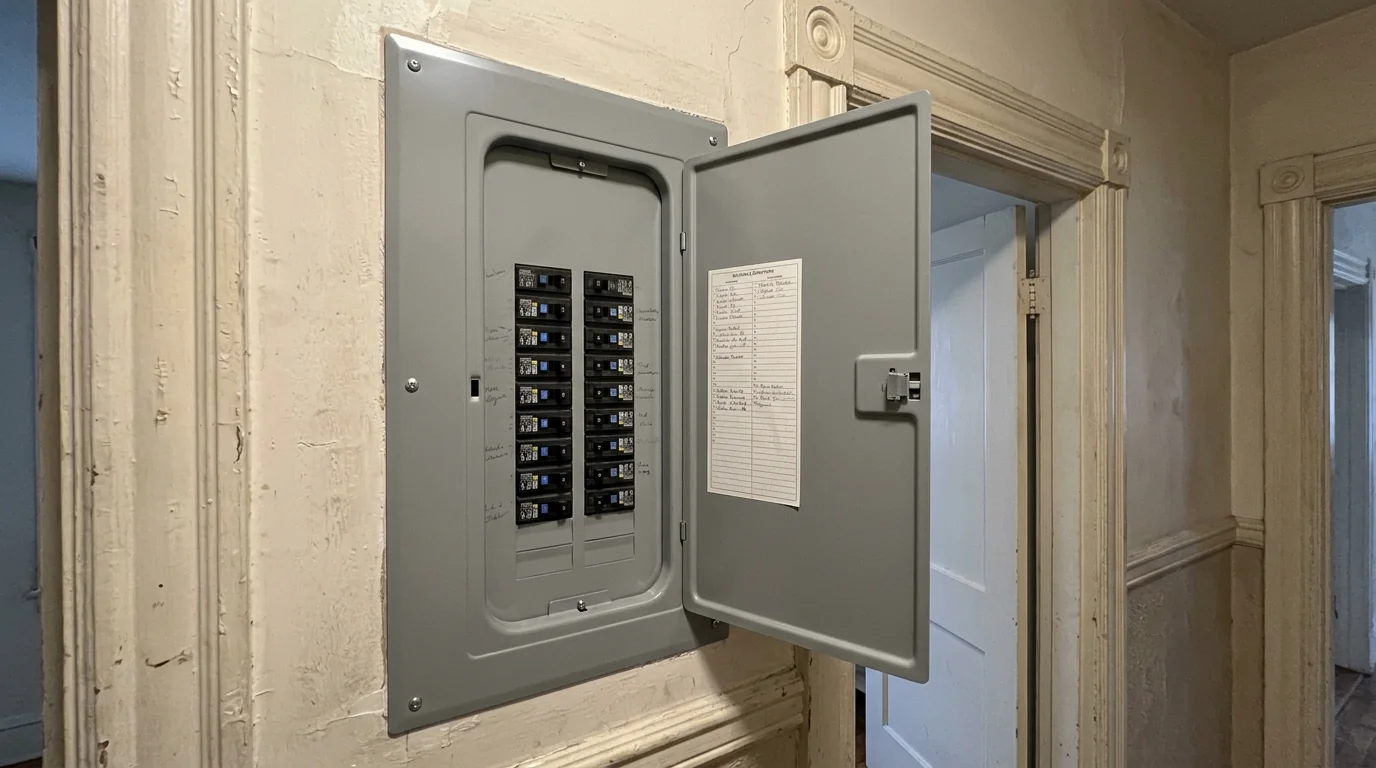
Breaker problems we replace
Worn breaker that trips under normal load
Your space heater and lamp have shared a bedroom circuit for years, and now the breaker trips within minutes. If the current draw measures well below the breaker rating, the trip mechanism has weakened. We confirm that reading, check the wire gauge matches the breaker size, and look for a loose terminal screw, which heats the breaker and makes it trip early. Replacement is quick once the cause is clear. The trade-off is about the panel itself: if it's a model with a poor record, such as a Federal Pacific Stab-Lok, or replacement breakers are hard to source, a new breaker may only be a short-term answer, and we tell you so.
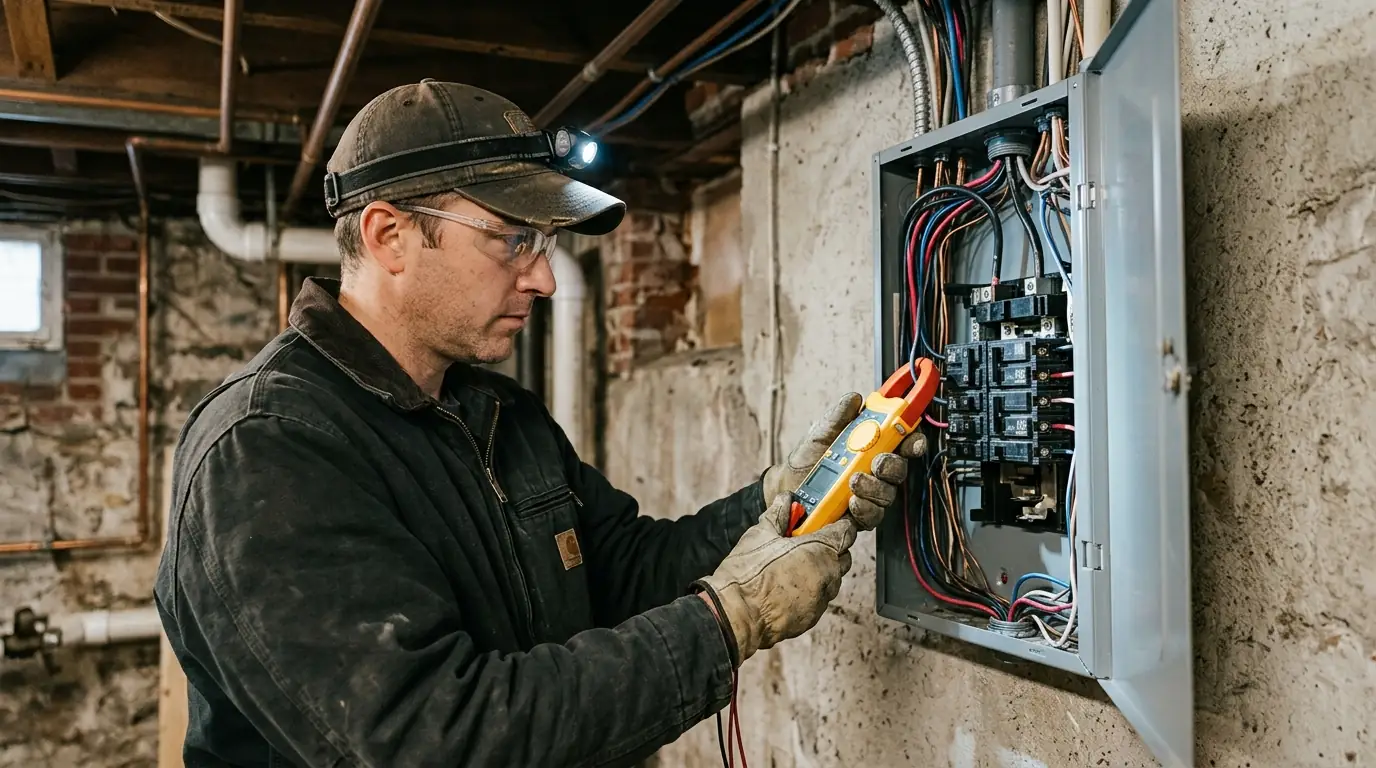
Hot or scorched breaker
A breaker that's warm under heavy load is normal. One that's too hot to keep a hand on, smells, or shows brown marks on the plastic is not. That heat usually comes from a loose wire at the terminal or a poor grip on the bus stab, and it can soften the breaker housing and the panel insulation beside it. We shut the panel down, remove the breaker and inspect both the wire end and the stab. Damaged conductors are cut back to sound copper. If the stab is pitted, the fix may mean moving the circuit to another slot or, in a worn panel, talking about replacing it.
AFCI and dual-function breaker swaps
Arc-fault breakers detect the erratic current of a damaged cord or a loose connection, and dual-function breakers add ground-fault protection in the same device. Under the 2023 NEC, many circuits in new and extended wiring need this protection, so swapping a standard breaker for an AFCI or dual-function type is a common upgrade. The breaker must be one your panel accepts, and older panels often have limited options. AFCIs also trip on real problems that standard breakers ignore, such as a neutral shared between two circuits, so we test the wiring before the swap and fix what would cause nuisance trips.
Breaker hot, tripping or loose? Call and we will test it.
Call (617) 843-6591Breakers in Cambridge and Somerville unit panels
Breaker calls from Cambridge and Somerville often come from three-family houses where every flat has its own small panel, usually in a back hall or the basement. Both cities are now encouraging more of that building type, so we see renovations and conversions adding load to panels sized for a lighter era. A breaker that trips or runs warm in one of those units may simply be worn, or it may be carrying more than it should after a remodel. We test the breaker and the circuit behind it, then match the replacement to the type the panel is listed for.
Standard, AFCI, GFCI or dual-function
The right replacement depends on what the circuit feeds and what your panel accepts.
| Breaker type | Protects against | Typical use |
|---|---|---|
| Standard thermal-magnetic | Overload and short circuit | General circuits with no added protection required |
| AFCI | Arcing from damaged cords and loose connections | Bedrooms and living areas in new or extended wiring |
| GFCI breaker | Current leaking to ground | Bathrooms, kitchens, outdoor and basement circuits |
| Dual-function | Arcing and ground faults together | Kitchens and laundry areas that need both |
What sets the cost of a new breaker
Breaker replacement is priced mostly on the breaker type and on what the panel looks like once the cover is off.
- Breaker type. A standard single-pole breaker is the simplest, while AFCI, GFCI and dual-function breakers cost more.
- Panel brand and age. Breakers for discontinued panels can be scarce, and only listed replacements belong in the panel.
- Condition of the bus. A pitted or burned stab means extra work to relocate the circuit or repair the panel.
- Wire condition. Heat-damaged conductors at the terminal need cutting back or a proper extension.
- Number of breakers. Replacing several in one visit costs less per breaker than separate calls.
- Nuisance trip fixes. Shared neutrals or wiring faults found during an AFCI swap add time.
Circuit breaker replacement questions
Testing tells you. We disconnect the wire and test it separately, then measure the breaker under load. Swapping a breaker without testing can hide a wiring fault that keeps getting worse.
No. Panels list the breaker types they accept, and a breaker that fits physically can still grip the bus poorly and overheat. We install the types the panel label lists.
Often because the circuit has a real issue the old breaker ignored, such as a shared neutral, a damaged cord or a loose splice. Finding and fixing that usually stops the trips.
For many brands, yes. For some discontinued panels they are scarce, and that can be a reason to consider replacing the panel rather than hunting for parts.
Slight warmth under heavy load is normal. Heat you can't keep a hand on, or any burnt smell, means a bad connection, and the circuit should stay off until it's checked.
We can make one safe in an emergency, but those panels have a poor record of tripping when they should, so we recommend planning a panel replacement rather than buying new breakers for it.