Updated October 2026
Straight answer
Condo and apartment electrical work in Boston means doing the job inside one unit without disturbing the building around it. Associations often require a written scope, set working hours and want proof of the permit before work starts. We handle that paperwork, wire the unit, and check the feeder from the meter room when the unit panel cannot keep up.
Where your unit ends and the building begins
Inside your walls, the wiring is usually yours. The feeder that runs up the building riser, the meter room and the common hallway circuits usually belong to the association. Most surprises in condo work happen at that boundary: a renovation that needs more power than the unit feeder carries, or a junction box in a shared chase that nobody owns on paper. Sorting out who is responsible before work starts saves arguments later.
For landlords, the problem is different. You get a short window between tenants to fix every loose outlet, dead light and missing cover plate before the next lease starts. We work through a turnover list in one visit where we can, and we write down anything that needs the building owner or association to act on shared equipment.
Renovations, turnovers and riser feeders
Unit renovations under association rules
A kitchen or bath renovation in a condo usually adds circuits: a range, a dishwasher, under-cabinet lights, a heated floor. Before we start, most associations want the scope in writing, the permit number, and work confined to set hours so neighbors are not hearing drills at seven in the morning. We plan the layout, confirm the unit panel has room, and prepare the documents the property manager asks for. The trade-off is time: board approval can add a week or two before the first wire is pulled, so it pays to start the request early.
Landlord turnover repairs
Between tenants is the cheapest time to fix an apartment, because the rooms are empty and nobody has to work around furniture or schedules. A typical turnover list covers warm or loose outlets, missing GFCI protection in the kitchen and bath, painted-over switches, dead fixtures and smoke alarms past their date. We test each room, fix what fails, and leave you a short written list of what was done. If something bigger shows up, such as a scorched panel bus or a circuit that crosses into another unit, you hear about it before the new tenant moves in.
Feeder and riser checks
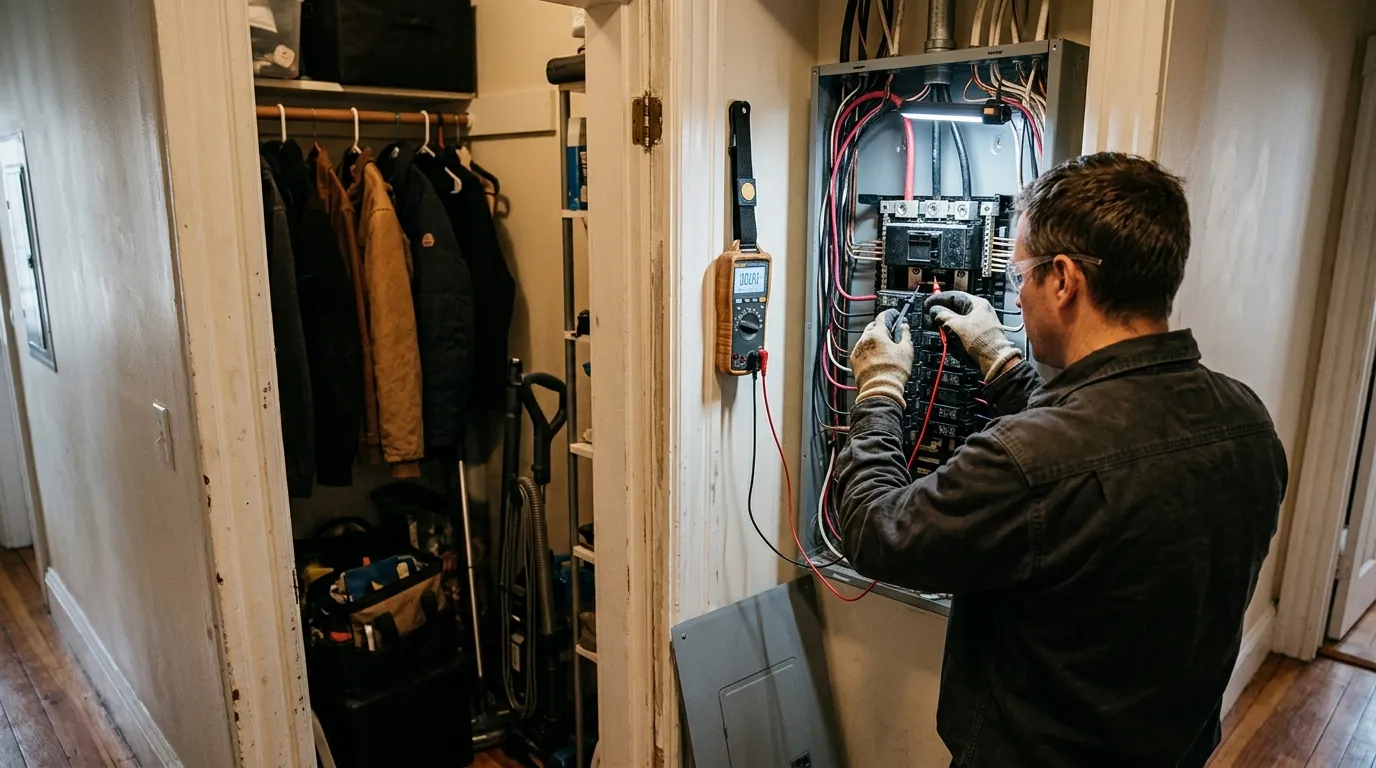
When lights in a unit dim every time the AC or a hair dryer runs, and the panel itself is fine, the feeder in the building riser is a common culprit. In older buildings those feeders were sized for a few lights and a refrigerator. We measure voltage drop under load at the unit panel, inspect the feeder terminations at the meter end, and tell you whether the cable is undersized or just has a loose connection. A loose lug is a quick repair. An undersized feeder in a shared riser is a building decision that usually goes to the association.
Board wants a scope before your renovation? Call and we will write it up.
Call (617) 843-6591What moves the price of condo electrical work
Condo and apartment jobs are priced on the unit work plus whatever the building adds in access and rules. These are the main drivers.
- Association requirements. Restricted hours, elevator booking and floor protection add time to every visit.
- Panel and feeder capacity. A renovation that outgrows the unit feeder adds riser work and approvals.
- Wall and ceiling type. Concrete ceilings and plaster walls are slower to fish than wood framing.
- Turnover list length. A handful of device swaps is quick. A unit with crossed circuits is not.
- Shared equipment. Work in a meter room or common chase may need the manager present.
Condos in old rowhouses and multi-unit buildings
Condo work in a converted brownstone means sharing the building's guts with your neighbors. In Back Bay, nineteenth-century row houses built on reclaimed tideland now hold several units each, usually with the meters in the basement and feeders climbing old chases to every floor. Brookline's planning department has described a town with aging housing and lots of multi-unit buildings, and renovations there meet the same shared risers. Before we touch a unit panel, we confirm what the feeder can carry and whether the association needs to sign off on work outside your walls.
How long condo electrical work takes
A turnover repair list usually takes one visit. A kitchen or bath renovation inside a unit runs a few days of electrical work spread across the renovation, plus inspection. The longest part is often before we start: board approval and scheduling elevator access can take a week or two, so send the request as soon as the plans are set.
How we work inside an association building
Read the rules
We review the association requirements and confirm hours, access and paperwork.
Survey the unit
Panel, feeder and every room are checked against the planned work.
Submit the scope
You or the manager get a written scope and the permit details for the board.
Wire the unit
Work stays inside approved hours, with hallways and elevators protected.
Test and document
Circuits are tested under load and you get a record for the association file.
Signs the problem is in the building wiring
Lights dim when a big appliance starts
Often voltage drop on an undersized or loose feeder.
Unit panel feels warm at the main
A loose termination or a feeder carrying more than it should.
A breaker controls outlets in a neighbor's unit
Circuits crossing unit lines from an old renovation.
Outlets dead after a neighbor's renovation
A shared junction box in a common chase was disturbed.
Condo and apartment electrical questions
Many associations require it for anything beyond swapping a fixture, especially new circuits or panel work. Check your bylaws, and we will supply the scope and permit details they ask for.
It depends on the master deed. Often the riser and meter room are common elements, so a feeder upgrade goes through the association even though only your unit benefits.
Sometimes, but in older buildings the feeder is a frequent cause. We measure voltage at the unit panel with the AC running to find out whether the drop is inside your unit or in the riser.
A typical turnover list of outlets, switches, fixtures and alarms often fits in one visit. Hidden wiring faults can push it longer, and we tell you before starting.
If the unit panel and feeder have the capacity, yes. We run a load calculation first so you know before the board approval or the appliance order.
Yes. We schedule around the hours the association sets, book elevators or loading areas through the manager, and protect common hallways while we carry material in and out.