Updated October 2026
Straight answer
A dedicated circuit in Boston is the fix when an appliance needs more power than a shared circuit can give, like an induction range on 240 volts or a microwave that trips the kitchen breaker. We read the appliance nameplate, confirm the panel has the space and the capacity, then run a single circuit from a new breaker to one receptacle or hardwired connection.
Which appliances need a circuit of their own
A dedicated circuit feeds one appliance and nothing else. It matters for loads that draw heavily for long stretches, or that cannot tolerate a nuisance trip, such as a refrigerator, a basement freezer, a heater in a cold office or network equipment. Sharing a 15 amp circuit with a bedroom and a hallway is how breakers end up tripping every evening at the same time.
The panel decides a lot of this job. A 240 volt circuit takes two breaker spaces, and older 60 or 100 amp services often have no room left and little spare capacity. Before we price the work, we look at the panel, count open spaces and run a load calculation when the new appliance is large. Sometimes the right answer is a subpanel, and sometimes it is a service upgrade first.
Range, dryer and office circuits we run
240 volt appliance circuits
Electric water heaters, heat pump water heaters, kilns, welders and large air conditioners all run on 240 volts. Each one needs a double-pole breaker and wire sized to its nameplate and the manufacturer instructions, plus a disconnect within sight when the equipment calls for one. We check the voltage the appliance wants, the breaker size it lists and whether it needs a neutral. Getting those three right is most of the job, and guessing at them leads to tripping, overheated terminals or a failed inspection. Long runs from a basement panel to a third floor or a detached garage may need a larger wire size to hold voltage up under load.
Induction range and dryer circuits
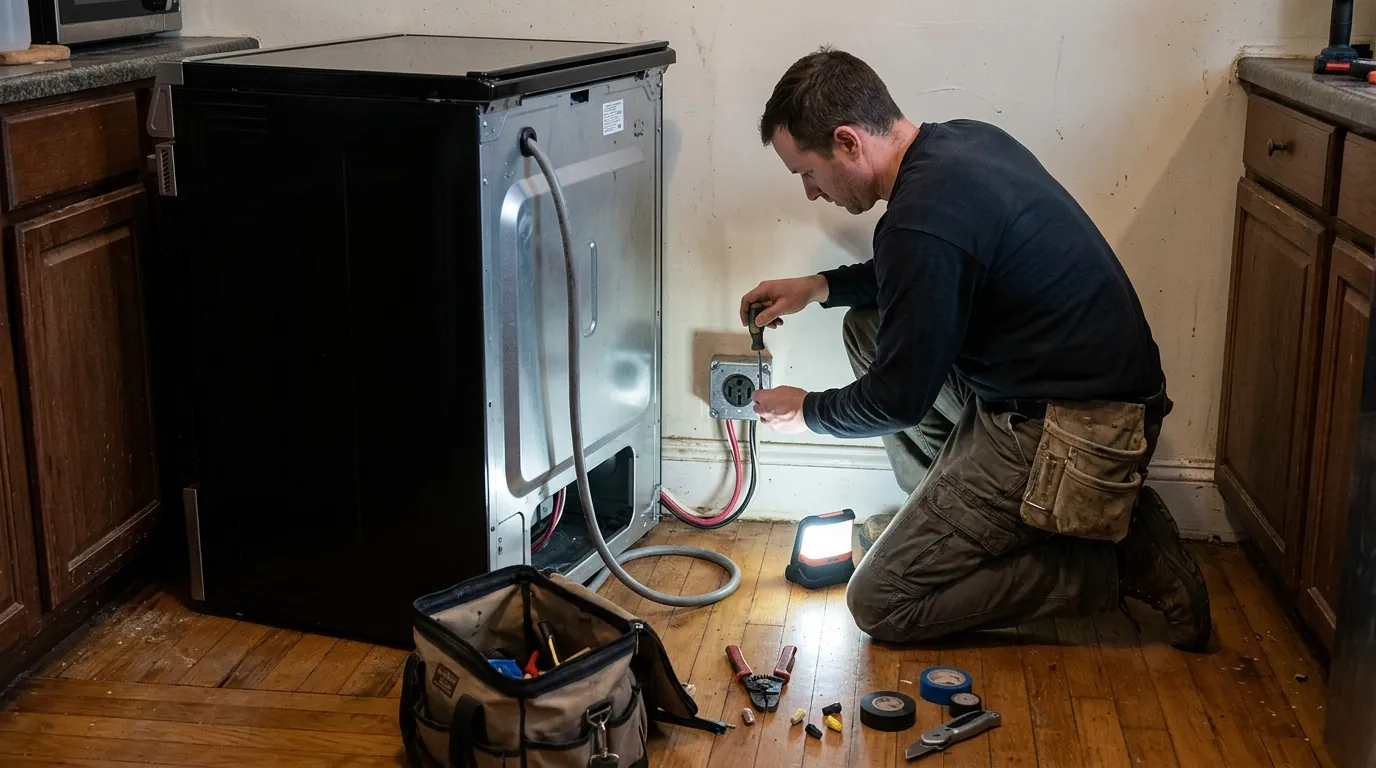
Switching from gas to an induction range usually means adding a 240 volt range circuit where there was only a 120 volt outlet for the igniter. Many induction ranges list a 40 or 50 amp circuit, so we size it to the model you buy, not a rule of thumb. Electric dryers typically use a 30 amp 240 volt circuit. New range and dryer circuits are four-wire, with a separate ground and neutral, so an older three-prong dryer outlet often gets replaced along with the cord. Recent code editions also call for GFCI protection on some 240 volt receptacles in kitchens and laundry areas, which changes the breaker we install.
Home office and server circuits
A desk with two monitors and a laptop runs fine on a shared circuit. A rack with a network switch, a storage box, a battery backup and a gaming tower may not, especially when it shares a breaker with a bedroom space heater. We run a dedicated 20 amp circuit to the office or closet, sometimes with a second one for the battery backup, so a trip somewhere else in the house cannot take the equipment down. We also check the grounding, since sensitive electronics do poorly on an old, badly grounded circuit. If the office is in a finished attic or a converted porch, fishing the run is usually the biggest part of the work.
Buying an induction range? Tell us the model when you call and we will check the panel.
Call (617) 843-6591What sets the cost of a new dedicated circuit
A dedicated circuit is priced on distance, wire size and the panel, and one look at the panel usually tells us which of these apply.
- Distance from the panel. A dryer beside the panel is a short run, while a range two floors up is not.
- Wire size. A 50 amp range circuit uses much heavier copper than a 20 amp office circuit.
- Panel space and capacity. No open spaces or too little spare capacity means a subpanel or a service upgrade.
- Breaker type. GFCI and AFCI breakers cost more than standard ones and depend on the panel brand.
- Finished walls on the route. Fishing through plaster or finished basement ceilings adds labor.
- Receptacle or hardwire. Some equipment plugs into a receptacle, and some is hardwired with a disconnect.
Sizes for the circuits people ask for most
Three of the most requested dedicated circuits differ more than people expect.
| Circuit | Typical size | Watch for |
|---|---|---|
| Induction range | 40 to 50 amp, 240 volt | Model nameplate and four-wire connection |
| Electric dryer | 30 amp, 240 volt | Old three-prong outlet and cord |
| Home office or rack | 20 amp, 120 volt | Battery backup load and grounding |
Massachusetts code and full Boston panels
A new dedicated circuit for an induction range, a heat pump or a car charger often lands in a Boston panel that has no empty spaces left. Before deciding between tandem breakers, a subpanel or a bigger service, ask about electrification incentives. Massachusetts programs running in 2026 can help with a panel upgrade, though whether you qualify depends on which program you apply through. If a funded upgrade is on the table, it can make more sense to do the panel and the new circuit together than to squeeze one more breaker in now.
What comes with a new dedicated circuit
- A load check against your existing service
- A breaker listed for your panel brand
- Copper wire sized to the appliance and the run length
- A new receptacle or disconnect at the appliance
- Four-wire range and dryer connections where required
- GFCI or AFCI protection where the code calls for it
- A labeled breaker in the panel directory
- A voltage test with the appliance running
How we add a circuit from panel to appliance
Read the nameplate
We take the voltage, amperage and circuit size from the appliance or its manual.
Check the panel
Open spaces, breaker compatibility and a load calculation for large appliances.
Plan the route
We pick the shortest path from panel to appliance that avoids opening finished walls.
Run and terminate
Wire pulled, breaker installed, receptacle or disconnect mounted and torqued to spec.
Test under load
We check voltage at the outlet with the appliance running and label the breaker.
Dedicated circuit questions
Almost always if you are replacing gas. A gas range uses a small 120 volt outlet, while an induction range needs a 240 volt circuit sized to the model, often 40 or 50 amps.
It depends on open spaces and on how much of your service is already in use. We check both, and run a load calculation for large appliances like ranges and heat pump equipment.
Often, yes. A built-in or over-the-range microwave usually belongs on its own circuit. We also check the breaker and the connections, since a weak breaker or a loose outlet can cause the same symptom.
Yes. If the circuit has a separate ground available, or we run one, we install a four-wire receptacle and the dryer cord gets changed to match. Some older runs need new cable.
New circuits are typically permitted work in Massachusetts. We file the permit on work that needs one and schedule the inspection.
A short run near the panel is often done in a few hours. A long run through finished floors, or one that needs a panel change first, takes longer.