Updated October 2026
Straight answer
Standby generator installation in Boston pairs a permanently mounted gas or propane unit with an automatic transfer switch that isolates the house from the grid. When power drops, the generator starts and takes over within seconds. Sizing comes from a load calculation, and load-shed modules let a smaller unit cover a whole house by holding back big loads.
How a standby generator takes over on its own
A standby unit sits on a pad outside, wired to an automatic transfer switch near the meter or the main panel. The switch watches utility voltage. When it disappears, the switch signals the generator to start, waits for steady output, then moves the house over. When the grid returns, it switches back and the generator runs a short cool-down before it stops. Nobody has to be home for any of it.
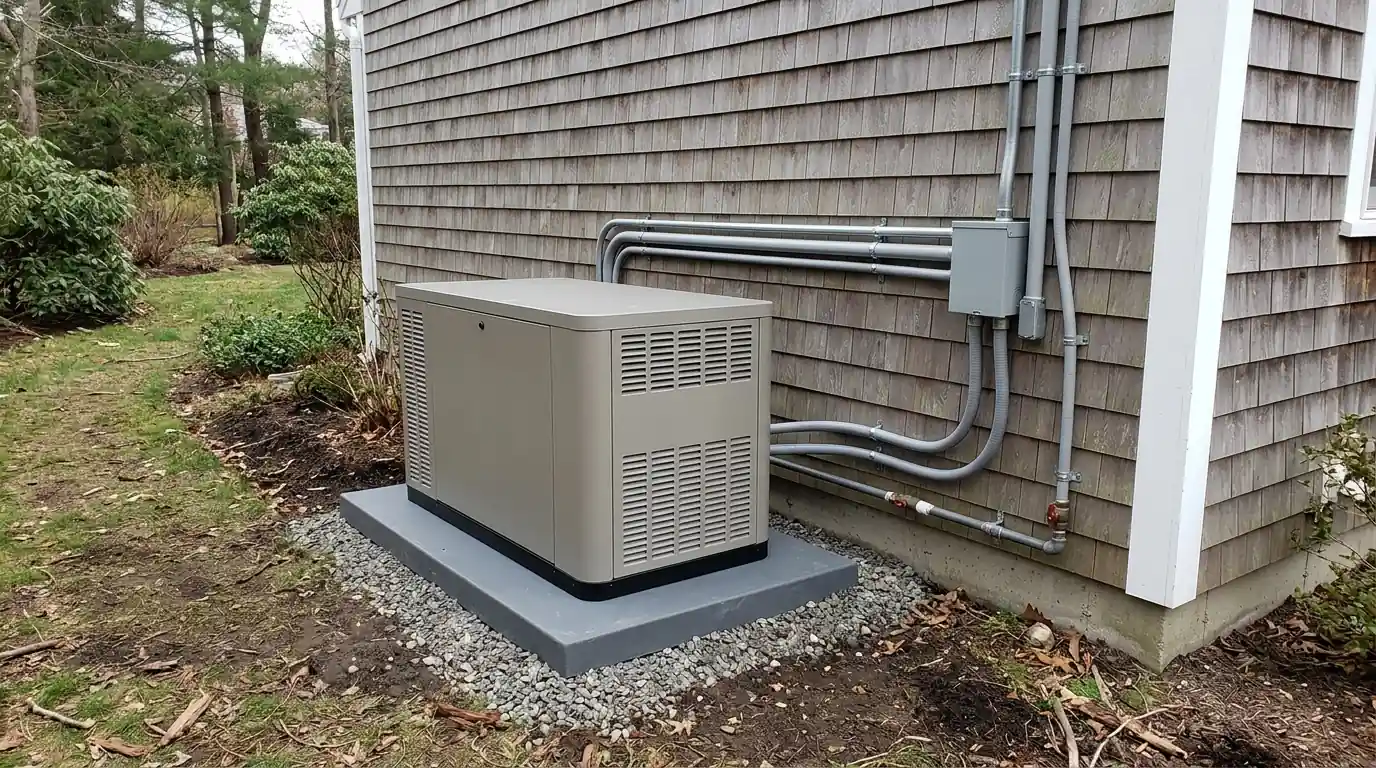
The electrical work is half the job. The other half is the fuel line and the pad, and both must meet the manufacturer clearances from windows, doors and vents. In tight Boston lots, those clearances often decide where the unit can go before anything else does. We walk the property with that in mind before we size anything, since the best electrical spot is not always a legal one for the unit.
Sizing the unit and the switch behind it
Whole-home standby units
A whole-home unit is sized to run everything at once, or close to it, so you do not have to choose circuits during an outage. That takes a large air-cooled or liquid-cooled generator and a service-rated transfer switch at the meter. The upside is simplicity: the house works as normal. The trade-off is size and fuel use, and on a gas line it also means checking that the meter and piping can supply the generator alongside the furnace and stove. We run the load calculation with your actual equipment, including well pumps, sump pumps and electric heat, so the unit is sized for real loads.
Automatic transfer switches
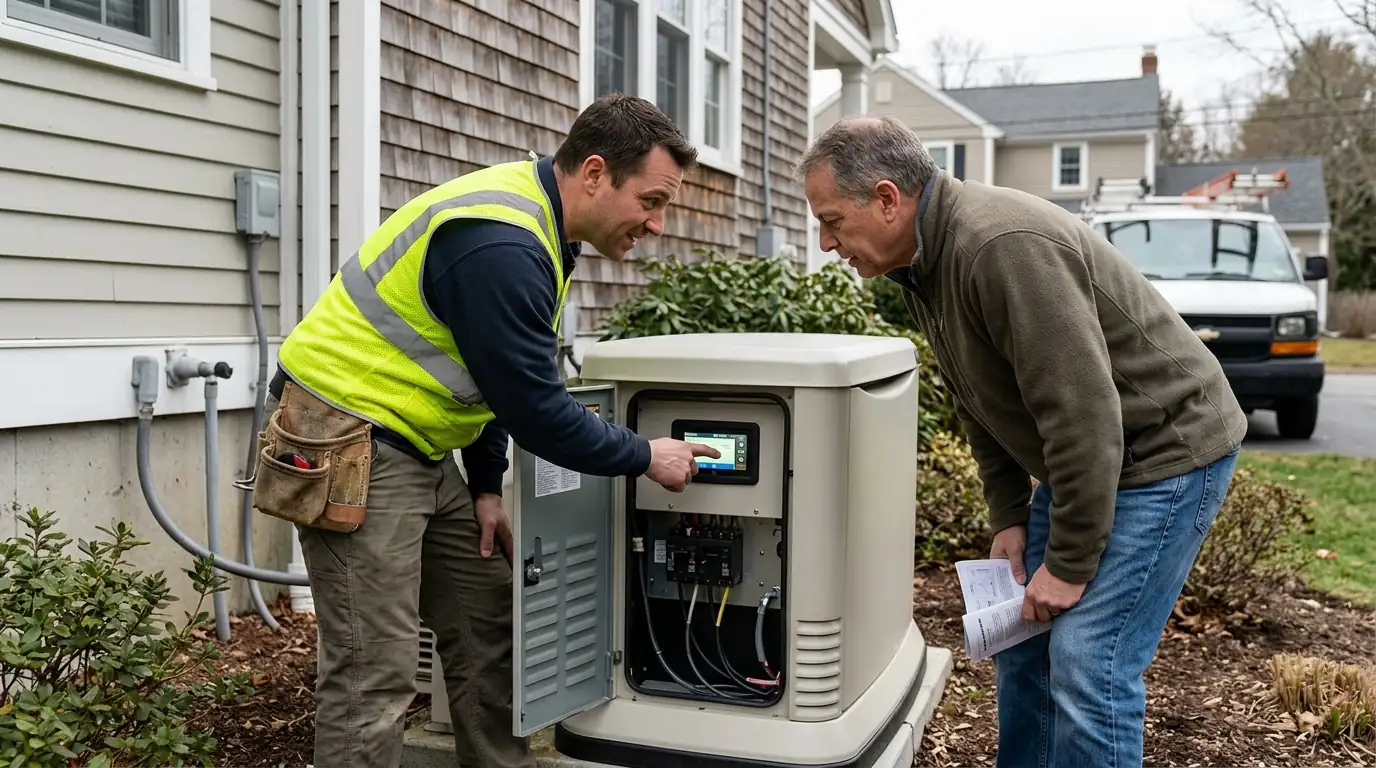
The automatic transfer switch is what makes a standby unit hands-free, and it is what keeps generator power off the utility lines. A service-rated switch goes between the meter and the main panel and transfers the whole house. A smaller switch can feed a subpanel of chosen circuits instead. The switch amperage has to match the service or the circuits it carries. We mount it, wire the control cable to the generator, and set the exercise schedule so the unit runs a short test each week. Then we pull the main breaker to simulate an outage and watch a full transfer before we leave.
Load-shed modules
Load-shed modules let a mid-size generator cover a whole house. A module sits in the circuit to a large load such as central air, a heat pump, an electric dryer or an EV charger. When the generator nears its limit, the transfer switch tells the module to hold that load off until there is room. The house keeps lights, refrigeration, heat and outlets, and the big load waits its turn. This often lets you buy a smaller generator, which costs less to run on fuel. The trade-off is that the air conditioner may pause in a summer outage while the well pump runs.
Done riding out outages in the dark? Call and we will size a standby unit.
Call (617) 843-6591What decides the cost of a standby generator install
A standby generator project is priced on the unit size and the transfer setup, plus the site work around it. These move it most.
- Generator size. A whole-home unit costs more to buy and to connect than one sized for selected circuits.
- Transfer switch type. A service-rated switch at the meter is a bigger job than a subpanel switch.
- Distance to the pad. The run from the switch to the generator sets wire and conduit length.
- Load-shed modules. Each managed large load adds a module and its wiring.
- Fuel line work. Gas piping and meter capacity, done by the gas fitter, is a separate cost.
- Permits and inspections. Electrical and gas work that needs permits adds filings and visits.
Standby, managed standby or portable
Three common ways Boston homeowners get through a long outage, and what each asks of you.
| Option | How it starts | What it powers |
|---|---|---|
| Whole-home standby | Automatically, within seconds | Everything, sized to the house |
| Managed standby with load shedding | Automatically, within seconds | Whole house, big loads take turns |
| Portable with interlock and inlet | You start it and flip breakers | Circuits you choose, within its output |
Long outages and the Danvers service rules
A standby unit earns its keep in the kind of outage that lasts past the first night. Big nor'easters have knocked out power to large numbers of Eversource homes across the state, and some of those customers waited days for it to come back. That is the case for an automatic system sized to run heat, the refrigerator and the sump pump unattended. In Danvers the job has one more step, because power there comes from the town's electric division, which sets its own written terms for service work. We review those terms before a service-entrance transfer switch goes in.
What the electrical work includes
- Load calculation and generator sizing
- Automatic transfer switch mounted and wired
- Generator feeder and control cable run
- Load-shed modules on large loads where needed
- Exercise schedule set on the controller
- Permit filed on electrical work that needs one
- Simulated outage test with you present
From site walk to a test outage
Site walk
We check pad placement against clearances and look at the meter and panel.
Load calculation and sizing
Your real loads decide whole-home, managed whole-home or selected circuits.
Coordinate fuel and pad
We schedule around the gas fitter and the pad so the unit can be set once.
Wire the switch and generator
Transfer switch, generator feeder, control cable and load-shed modules.
Simulated outage test
We cut utility power at the main and watch the full transfer and return.
Standby generator questions
Typically within a few seconds to under a minute, depending on the transfer switch settings. Lights go out briefly, then come back on generator power without anyone touching a switch.
Natural gas means no refilling but depends on the gas meter capacity. Propane works where there is no gas service and needs a tank sized for long outages.
Yes, if it is sized for it or paired with load-shed modules that hold back big loads. A load calculation shows which way costs less to buy and to fuel for your house.
Yes. Oil, filters, the starting battery and the weekly exercise run all need attention. Follow the manufacturer schedule so the unit is ready when the next storm takes the grid down.
Wherever it meets the manufacturer clearances from windows, doors and vents and any local setback rules. We check those on the site walk before you commit to a unit size.
No. A gas fitter handles the fuel piping and the meter check. We coordinate the schedule so the unit is set, fueled and powered in one sequence instead of three separate waits.