Updated October 2026
Straight answer
Light fixture installation in Boston comes down to the box in the ceiling: a standard outlet box is rated for fixtures up to 50 pounds, and anything heavier needs a box listed for that weight or separate support. In older homes we often find shallow pancake boxes and brittle wire, which we replace before hanging the new fixture.
Why the ceiling box matters more than the fixture
A fixture swap looks like a few wire nuts and two screws. In a newer house it often is. In older Boston housing, taking down the old light can reveal a box screwed to a lath strip, cloth insulated wire that crumbles when bent, or no box at all, just a hole with wires pulled through. None of that should carry a new fixture.
So the visit starts at the box. We check how it is mounted, what it is rated to hold and the condition of the wire feeding it. Then we hang the fixture at the right height, get it level and centered on the table or island, and make sure the canopy closes tight against the ceiling.
Heavy fixtures, island pendants and old boxes
Chandeliers and heavy fixtures
Glass and wrought iron chandeliers can weigh far more than they look, and a box that held a simple dome light is not meant for them. The electrical code lets a standard box support a fixture up to 50 pounds, and heavier fixtures need a box listed for the weight or support that ties directly to the framing. We weigh or look up the fixture, then install a rated brace between joists or lag the support to a joist. High foyer ceilings add staging and a second person to hold the fixture while it is wired. The result is a chandelier that hangs from wood, not drywall or plaster, and a canopy that sits flush without strain on the wires.
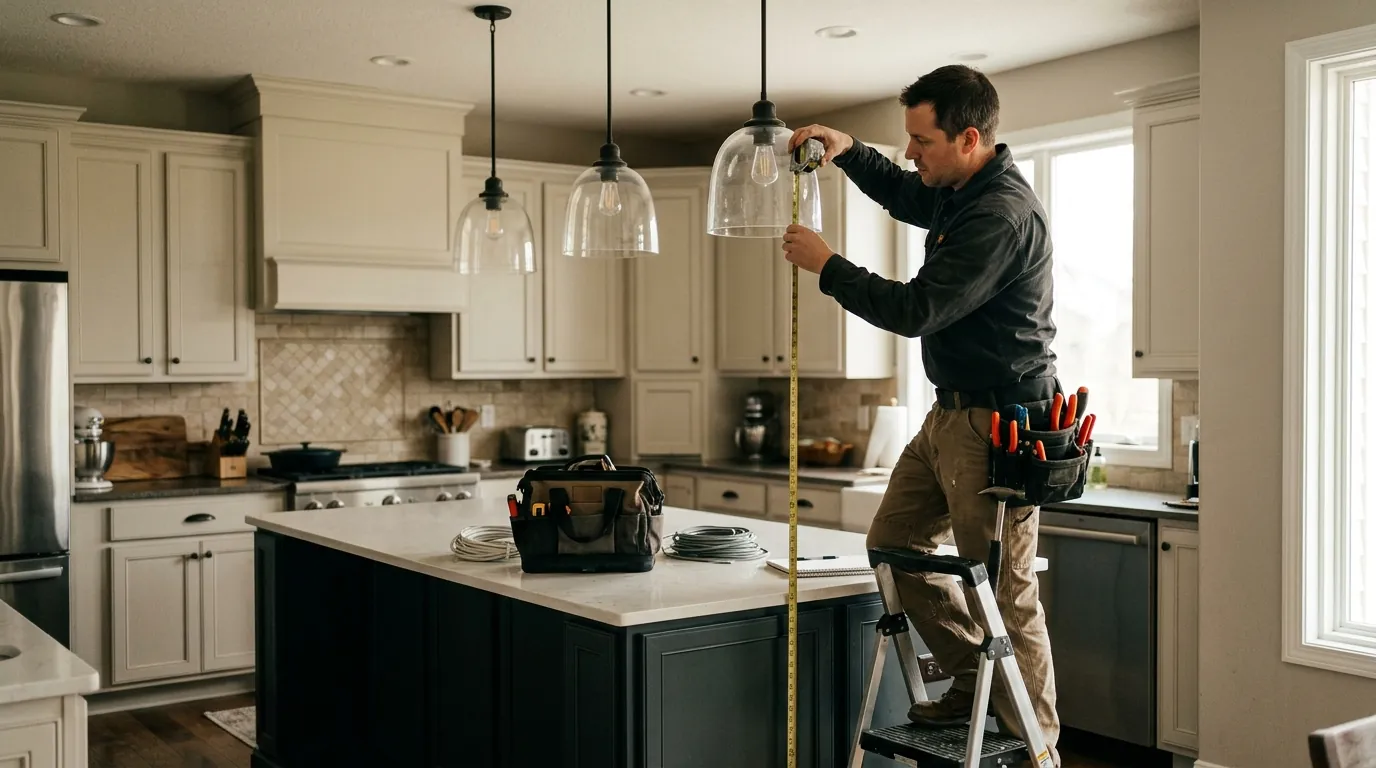
Pendants over islands
Island pendants look simple until you try to center them. The box is often off center, the joists run the wrong way, or the island moved in a remodel. We measure from the island, not the old box, and set new boxes where the pendants need to hang, fished through the ceiling from above or from the existing location. Height usually lands about 30 to 36 inches above the counter, adjusted for your sight lines and how tall the people cooking are. For two or three pendants we also check that the circuit and dimmer can carry the combined load, and that the fixtures dim together without one flickering.
Fixture boxes in old ceilings
Shallow pancake boxes, boxes nailed to lath, and old fixtures hung on a bare stud with a strap are common in houses built before modern box rules. Cloth or rubber insulated wire above them often goes brittle from decades of heat from incandescent bulbs, and it cracks when we move it. We replace the box with one sized for the conductors, mounted to framing or a rated brace, and if the wire has cooked we cut back to sound insulation or run a new length from the nearest good junction. The point is a box that can hold the fixture and wiring that can carry the load for years.
Heavy chandelier waiting in a box? We will check the ceiling support first.
Call (617) 843-6591What changes the cost of hanging a fixture
A fixture swap on a sound box is a short visit. These are the things that turn it into a longer one.
- Fixture weight. Heavy chandeliers need a rated brace or direct framing support.
- Ceiling height. Foyers and stairwells need tall ladders or staging and a second person.
- Box condition. Pancake boxes, lath-mounted boxes or missing boxes are replaced before anything hangs.
- Wire condition. Heat-damaged cloth wire above an old fixture may need to be cut back or replaced.
- New locations. Moving a box to center a pendant means fishing new cable through the ceiling.
- Fixture assembly. Crystal chandeliers and multi-arm fixtures take time to assemble before they go up.
High ceilings and old medallions
Hanging a heavy chandelier from a tall plaster ceiling is a different job from swapping a flush mount in a newer house. Back Bay's brownstone and brick row houses, laid out on filled land in the 1800s, are full of those ceilings, often with a plaster medallion at the center and an old pancake box behind it. We work through the existing opening wherever we can, reach the joists, and install a rated brace so the weight hangs from framing rather than from lath. The medallion stays intact, and the new fixture hangs level and solid.
What a fixture install covers
- Box type and weight rating checked
- Rated brace or framing support for heavy fixtures
- Old or undersized box replaced
- Damaged wire cut back to sound insulation
- Fixture assembly on site
- Height and centering agreed before final mounting
- Grounding connected at the fixture
- Dimmer function tested
How we hang a new light
Check the fixture
Weight, mounting type and box requirements read from the box and the instructions.
Open the old light
Power off at the breaker, old fixture down, box and wire inspected.
Fix the support
Box replaced or braced to framing when the weight or condition calls for it.
Hang and wire
Fixture assembled, hung at the agreed height, grounded and connected.
Level and test
Canopy tightened, fixture leveled and centered, dimmer checked across its range.
What to sort out before we arrive
Safe for a homeowner
- Pick the fixture and check its weight on the box
- Measure the table or island and mark where you want it centered
- Switch off the breaker before removing an old glass shade or bulb
Leave to an electrician
- Hanging anything over 50 pounds
- Replacing a pancake box or a box nailed to lath
- Work above crumbling cloth insulated wire
- Moving a box to a new location
If the wire above your old fixture cracks when you bend it, stop and leave it as is. That insulation has cooked and needs to be cut back or replaced.
Light fixture installation questions
Only if the box is listed for that weight and mounted to framing. A standard ceiling box is good for fixtures up to 50 pounds. Above that, or on a loose or lath-mounted box, we add a rated brace or support first.
A common guide is about 30 to 34 inches above the table under an eight foot ceiling, raised a few inches for each extra foot of ceiling. We set it where it looks right to you before we tighten anything.
Yes. Every fixture needs an enclosed box so splices are contained if anything overheats. We install one mounted to the framing, which usually fits through the opening you already have.
Yes. Crystal chandeliers and multi-arm fixtures arrive in pieces, and we assemble them on site before hanging so they are wired and balanced correctly.
Usually. We cut a new box location and fish cable from the old one through the joist bay, then cover the old opening with a blank plate or leave it ready for patching.
If the fixture uses LED lamps, the old dimmer may flicker or buzz. We test it and replace the dimmer with an LED-compatible one if needed.