Updated October 2026
Straight answer
Heat pump electrical wiring in Boston means a dedicated 240 volt circuit for each outdoor unit, a disconnect within sight of it, and a short flexible whip to the condenser. The circuit size comes from the nameplate, not a guess. In a cold-climate system replacing oil or gas heat, we also confirm the panel and service can carry the winter load.
Who powers the heat pump once it is mounted
Heat pump projects usually run on two tracks. The HVAC contractor sizes and mounts the equipment and runs the refrigerant lines. The electrical side is the circuit from the panel, the disconnect outside, the whip into the unit and, on most mini-splits, the control cable between the indoor heads and the condenser. When the two tracks are not coordinated, the equipment sits on its pad waiting for power.
Each outdoor unit carries a nameplate with a minimum circuit ampacity and a maximum overcurrent protection. We size the wire to the first and the breaker to the second. A house moving from oil to full heat pump heating is adding one of its largest loads, so we run a load calculation before anything gets installed. That way nobody finds out in the first cold snap that the main breaker trips with the heat, dryer and oven on together.
Circuits, disconnects and winter loads
Ductless mini-split circuits
A single-zone mini-split usually needs one 240 volt circuit to the outdoor unit, which then feeds the indoor head through the control cable your installer runs with the line set. Multi-zone condensers serve several heads from one outdoor unit and one larger circuit. Some indoor heads, mostly ceiling cassettes and ducted air handlers, want their own circuit too, so we read the installation manual before quoting. The circuit runs from the panel to the outside wall, often through a basement or along the line-set path. In plaster houses we plan the route to avoid opening finished walls when an exterior or basement path will do.
Disconnects and whips
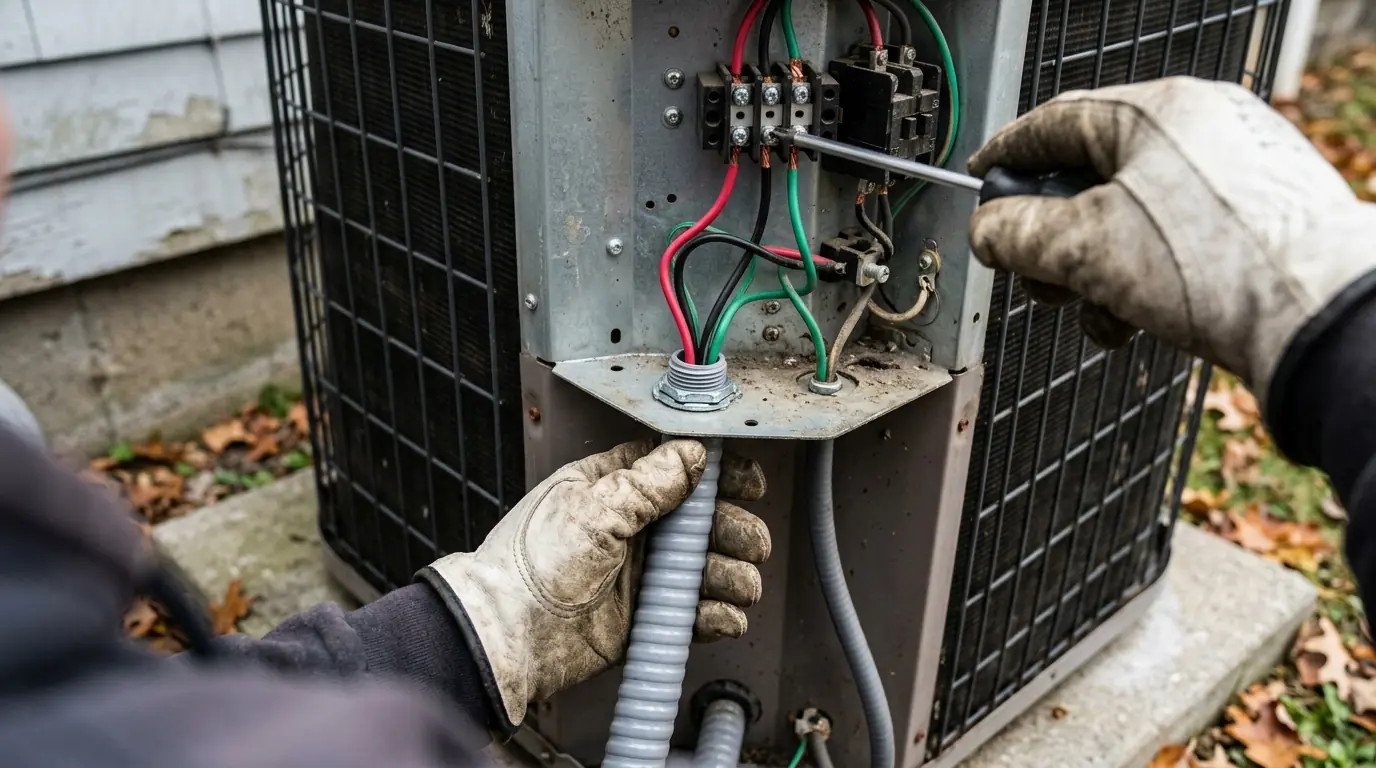
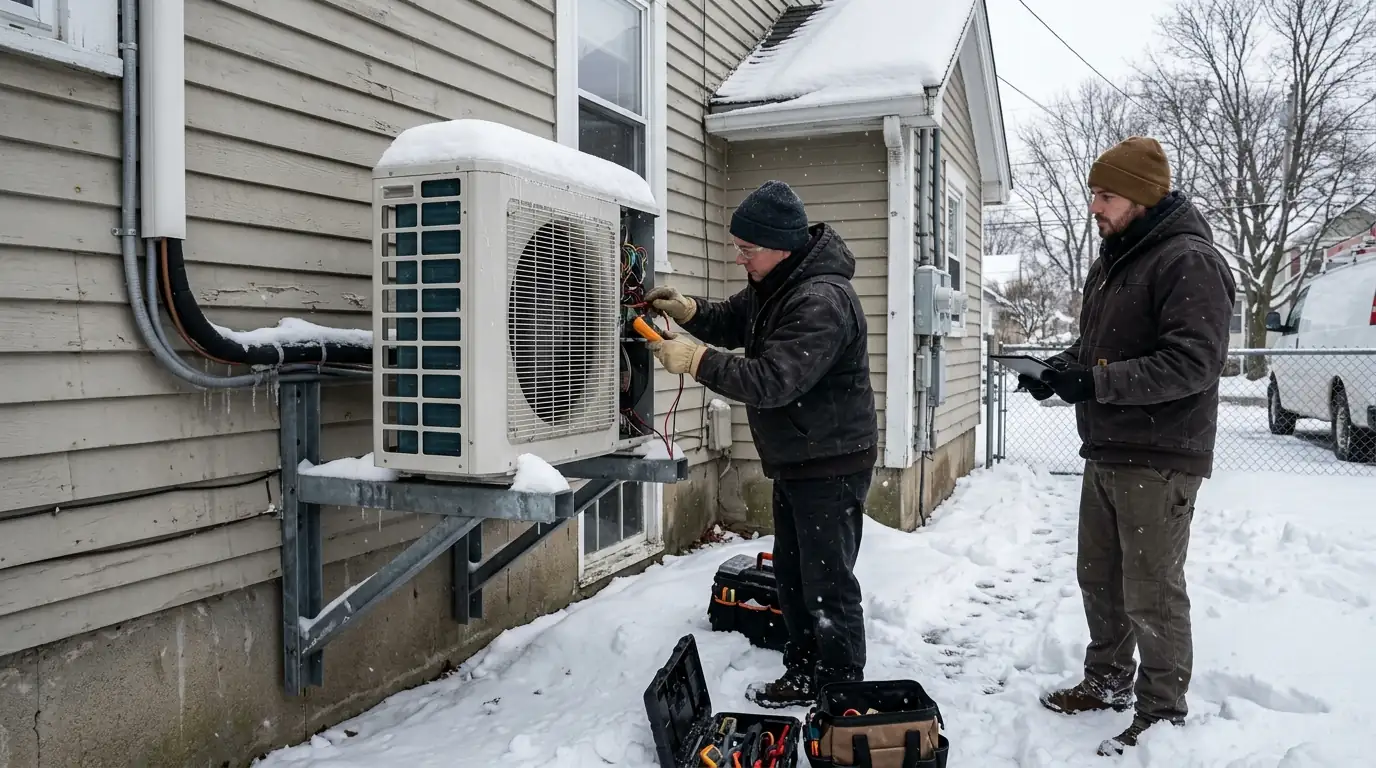
The code requires a disconnect within sight of the outdoor unit so a technician can kill power while working on it. Most installs use a small fused or non-fused pullout box on the wall beside the condenser, mounted where it stays clear of snow and drip lines. From the disconnect, a short liquid-tight flexible whip runs into the unit. Whips get stepped on, chewed and pulled by ice, so we secure them and keep them short. A cracked whip or a disconnect full of water is a common reason a heat pump trips in its second winter, and we replace those too.
Cold-climate system loads
A cold-climate heat pump keeps heating near zero degrees, but it draws its hardest when it is coldest outside, exactly when the house uses the most power. Some systems also have electric resistance backup strips in the air handler, and those can draw as much as a range. Add an EV charger and an electric water heater and a 100 amp service can be maxed out. We run the load calculation with the real equipment specs. If the service is short, the choices are a smaller system, load management that holds back a lower-priority load, or a service upgrade.
Heat pump on the way and no circuit for it? Call and we will plan the wiring.
Call (617) 843-6591What decides the cost of heat pump wiring
Heat pump wiring is priced per outdoor unit, then adjusted for the route and the panel. These are the factors that shift it.
- Number of outdoor units. Each condenser gets its own circuit, disconnect and whip.
- Route to the outside wall. An open basement is quick. Finished ceilings and plaster walls take longer to fish.
- Indoor head circuits. Cassettes and ducted air handlers that need their own circuit add runs.
- Backup heat strips. Resistance backup in an air handler needs a heavier circuit of its own.
- Panel and service capacity. A full panel or a short service means a subpanel, load management or an upgrade.
Heat pump and panel incentives in Massachusetts
Heat pump projects in Massachusetts often come with incentive paperwork, and the electrical side can affect it. Mass Save's heat pump rebates are real, but who qualifies shifts from one year to the next, so ask your HVAC installer which version applies before the contract is signed. When the outdoor units push an older service past what it can carry, the panel itself may qualify for an electrification incentive this year, depending on which program you go through. We do the load calculation early, so you know whether a panel upgrade belongs in the application before anything is filed.
What the electrical side covers
- Load calculation with the actual system specs
- Dedicated 240 volt circuit for each outdoor unit
- Disconnect mounted within sight of the condenser
- Liquid-tight whip secured to the unit
- Separate circuits for indoor heads that need them
- Permit filed on work that needs one
- Voltage check at start-up with the HVAC installer
How long heat pump wiring takes
A single-zone mini-split with an easy basement route is typically wired in a few hours. Multi-zone and ducted systems with several circuits take a day. If the load calculation calls for a subpanel or service upgrade, that work comes first and can add a day plus the utility schedule.
How we work around your HVAC installer
Read the equipment specs
We take the nameplate data or submittals from your HVAC installer.
Load calculation
House loads plus the new system, checked against the service size.
Coordinate the schedule
We set the electrical rough-in around the HVAC crew so neither waits on the other.
Wire circuits and disconnects
Circuits run, disconnects mounted clear of snow, whips secured.
Power up with the installer
We confirm voltage at the unit and the installer starts the system.
Heat pump wiring questions
Usually not. Most wall-mounted heads are powered from the outdoor unit through the control cable. Some ceiling cassettes and ducted air handlers need a separate circuit, which the installation manual specifies.
Sometimes. It depends on the size of the system, any backup heat strips and your other electric loads, such as a range or EV charger. A load calculation answers it before you commit to equipment.
So the person servicing the unit can shut it off within sight of where they are working, without walking to a basement panel and trusting nobody switches it back on.
Yes. Water in a disconnect or a split whip can trip the breaker or damage the unit. Both are routine replacements, and we check the circuit back to the panel while we are there.
No. We handle the electrical side and work with the HVAC contractor who sets the equipment, runs the refrigerant lines and commissions the system once power is on.
New circuits for fixed equipment generally need an electrical permit. We file on work that needs one and schedule the inspection around the HVAC start-up.