Updated October 2026
Straight answer
Outlet and switch repair in Boston usually comes down to one loose connection inside the box, most often a wire pushed into a backstab hole instead of wrapped under a screw. We cut power, inspect the wire ends for heat damage, reconnect with screw terminals or pigtails and install a new device. Then we test polarity and ground.
Signs an outlet or switch needs work
Plugs fall out easily
The contacts have lost tension and arc under load.
Faceplate or plug warm to the touch
A connection is turning current into heat.
Outlet works only when the plug is wiggled
A loose terminal or worn contact inside the device.
Switch has to be held to stay on
The switch mechanism has failed.
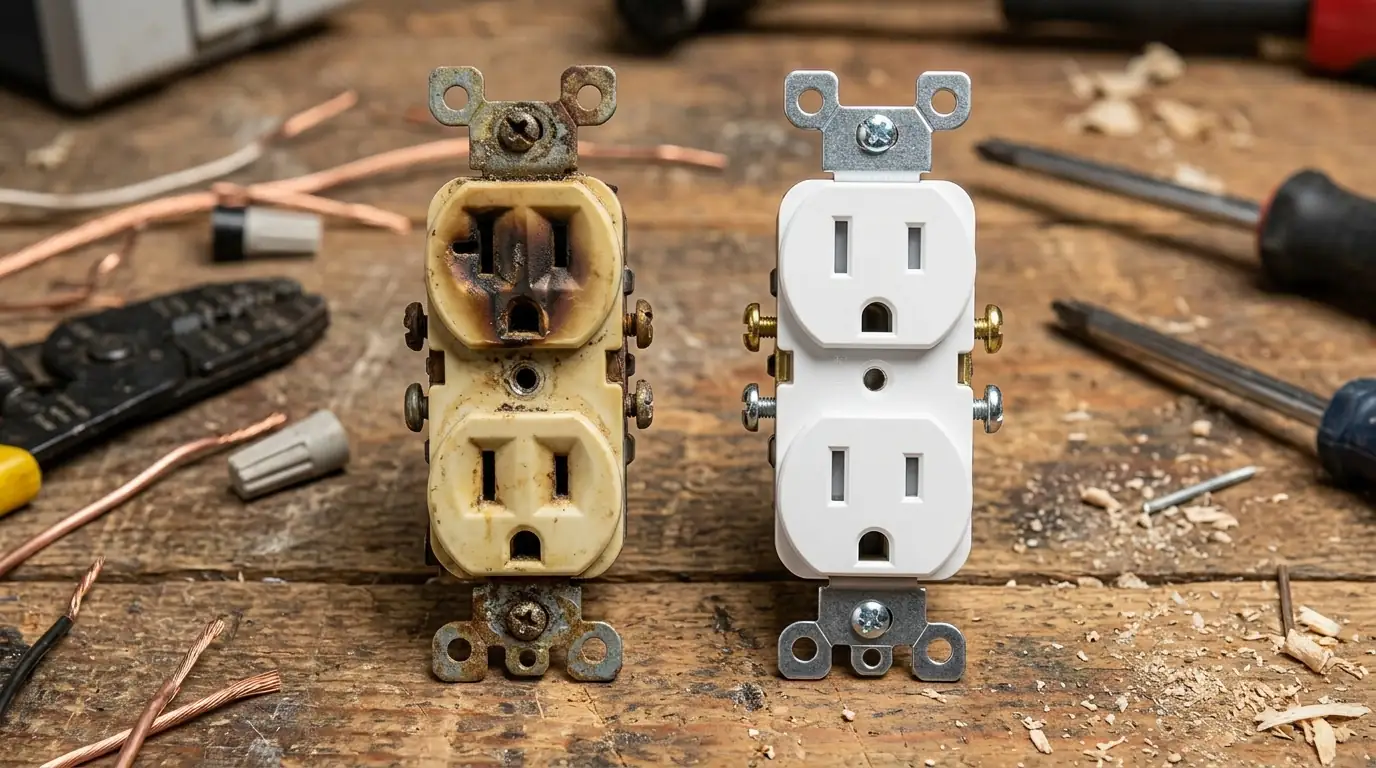
Brown marks around the slots
Arcing has already scorched the device.
How an outlet repair is done right
Cut power and confirm
We switch off the circuit and test that the box is dead before touching a wire.
Inspect the connections
Wire ends, terminals and the box are checked for heat damage.
Rewire properly
Backstabs move to screw terminals or pigtails, with conductors trimmed to clean copper.
Install the device
A new outlet or switch suited to the room and the circuit goes in.
Test the circuit
Polarity, ground and GFCI function are checked, along with the outlets downstream.
Why outlets and switches fail
Outlets wear out in a predictable way. The spring contacts that grip a plug lose tension after years of use, so cords sag and the connection arcs slightly with every bump. Behind the device, a terminal that started tight works loose as the wire heats and cools. Either one produces heat, and heat at a device is the start of the browned plates and melted plugs people call us about.
A proper repair is more than swapping the device. We look at the condition of the wire in the box, whether the box is overfilled, whether the ground is real or just a jumper to nothing, and whether power passes through this outlet to others. Fixing a pass-through box properly often cures a dead outlet two rooms away.
Device repairs we make most
Loose or warm outlets
When a plug slides out under its own weight, the contacts inside the outlet have lost their grip. That loose fit causes small arcs and heat at the blades, which is why the plug and faceplate can feel warm and sometimes show brown marks. We replace the device with one that holds firmly, and in living areas that means a tamper-resistant outlet. If the warmth comes from the back of the device, we examine the wire ends, since heat often travels into the insulation. The replacement itself is simple. The trade-off comes when the wire is brittle, which can mean adding a short section of new cable.
Backstabbed connections
Many builders pushed wires into the small holes on the back of outlets because it's fast. Those spring-held connections touch less wire than a screw terminal, and over years of heating and cooling they loosen. The result is outlets that work intermittently, or a whole chain that goes dead when one connection opens. We move each conductor to the screw terminals or, where power continues to other outlets, join the wires with a pigtail so the device no longer carries current to the rest of the circuit. It adds a few minutes per box and removes the most common failure point in residential wiring.
Three-way switch faults
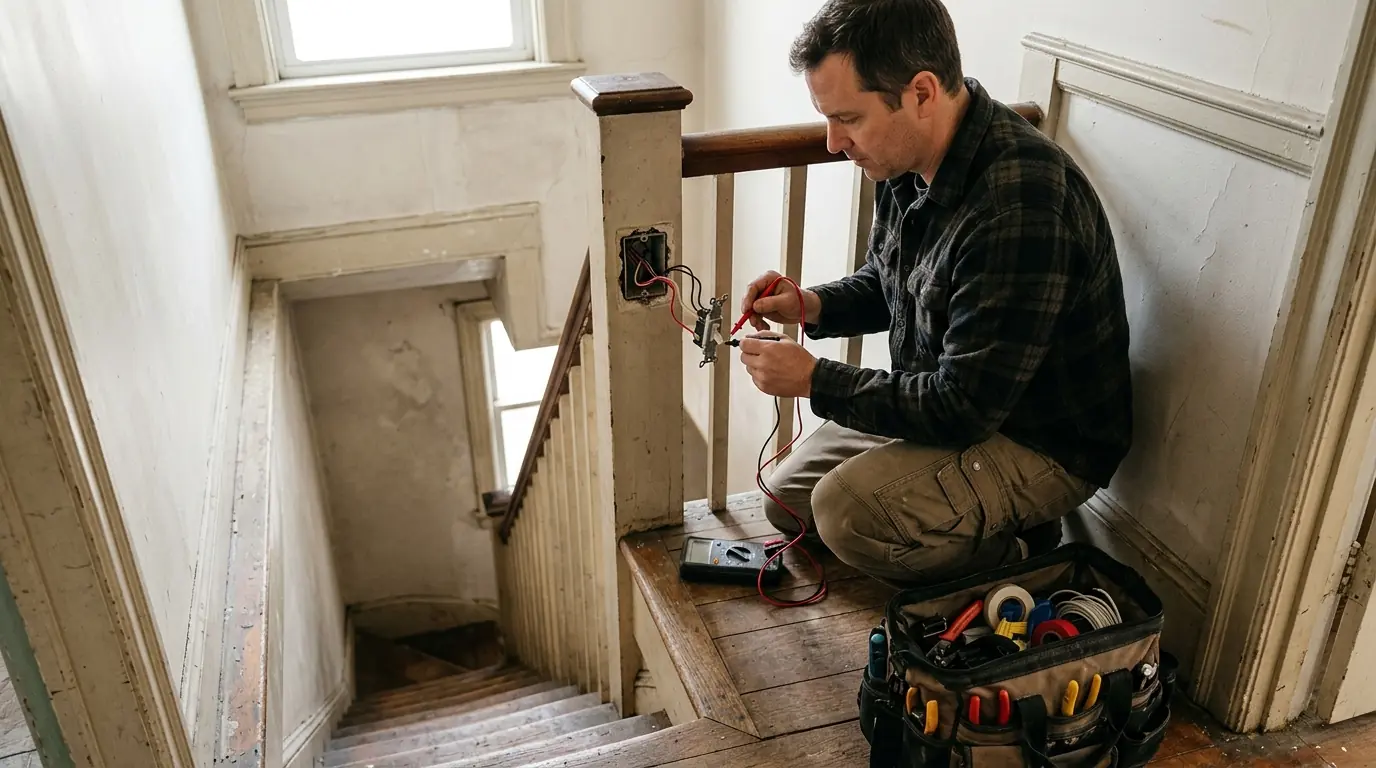
Three-way switches control one light from two places, such as the top and bottom of a stair, using two traveler wires between them. When a light only works from one switch, or only when the other sits in a certain position, the cause is often a worn switch or wires moved to the wrong terminals during an earlier replacement. We identify the common and traveler conductors with a meter rather than by color, since older work rarely follows the colors. Swapping one switch is quick. A broken traveler inside the wall takes longer, because we have to locate it and run a replacement.
Outlet warm or plugs falling out? Call and we will fix the box.
Call (617) 843-6591What you can check before calling
Safe for a homeowner
- Reset any tripped GFCI outlet and test it with its button
- Stop using an outlet that is warm or scorched
- Try a new bulb to rule out the lamp before blaming the switch
- Use a plug-in tester to check for open grounds
Leave to an electrician
- Opening a box with power on any wire in it
- Outlets that are warm or discolored
- Three-way and four-way switch wiring
- Adding GFCI protection to ungrounded outlets
A single box can hold wires from two circuits, so a switched-off breaker does not always mean every wire inside it is dead.
Mixed wiring in older Boston flats
A single Boston flat can hold outlets and switches from four or five different decades. Original two-wire devices sit next to grounded ones from a past renovation, and a switch replaced last year may share a box with brittle cloth-covered conductors. That mix is why we test every device we repair for ground, polarity and a tight connection rather than trusting the cover plate. Old plaster walls also mean shallow boxes, so a bulky new device or a smart switch sometimes needs a deeper box before it fits safely. We explain the options before we change anything.
What a device repair costs depends on
Outlet and switch repairs are small jobs, so the cost mostly follows how many devices need work and what we find inside the boxes.
- Number of devices. Fixing several outlets in one visit spreads the trip cost across them.
- Device type. GFCI, USB, smart and specialty switches cost more than standard devices.
- Wire condition in the box. Brittle or heat-damaged conductors may need cutting back or a short new section.
- Overfilled or damaged boxes. Cracked or crowded boxes sometimes need replacing to hold the device safely.
- Three-way tracing. Locating a broken traveler wire inside a wall takes extra time.
Outlet and switch repair questions
Usually a loose connection behind the device or worn contacts gripping the plug. Either way, current is turning into heat. Stop using it and have the outlet replaced and the wire ends checked.
Backstab connections are allowed on many devices for certain wire sizes, but they loosen more often than screw terminals. On our repairs we use screw terminals or pigtails.
Only with the right protection. A GFCI outlet can replace a two-prong outlet without a ground if it's labeled correctly. A plain three-prong outlet with no ground behind it is not safe.
On a three-way setup, one switch may be worn or the travelers may sit on the wrong terminals. A single switch that works intermittently is usually just worn out.
In most living areas, replacements should be. The shutters inside block objects pushed into one slot, which matters in a house with small children.
Yes, if the box and wiring suit it. Many smart switches need a neutral wire, which older switch boxes don't always have, so we check first.