Updated October 2026
Straight answer
A commercial LED retrofit in Boston usually means removing fluorescent ballasts or swapping whole troffers, then adding the controls the energy code expects in new or altered lighting. Most offices and stores keep their ceiling grid and circuits, so the work moves room by room, often after hours, without shutting the business down for days.
Why buildings move off fluorescent lighting
Most commercial lighting calls start with a maintenance problem. Someone is on a ladder every week replacing tubes, the ballasts are an obsolete type, and a few fixtures flicker no matter what goes in them. Converting to LED ends that cycle and cuts the lighting load, which can matter when a tenant wants to add equipment to a panel that is already busy.
The decision that shapes the job is how much of the old fixture stays. A tube-only swap is quick but leaves an aging housing and sockets in place. A retrofit kit or a new fixture costs more up front and takes longer per room, but it resets the clock on the whole assembly. We look at the ceiling, the wiring and how long you plan to stay before recommending one.
Retrofit work in ceilings, lots and controls
Troffer and fluorescent retrofits
Lay-in troffers in a drop ceiling are the bulk of this work. There are three ways to convert them. Ballast-bypass LED tubes wire line voltage straight to the sockets, which removes the ballast but means the fixture must be relabeled and the next person must not put a fluorescent tube back in. Retrofit kits replace the guts of the troffer with an LED panel and driver while the housing stays in the grid. Full replacement swaps the whole fixture for a flat panel. We open a few fixtures first, because brittle sockets, cooked wire and old whips decide which route is sensible.
Parking and exterior lighting
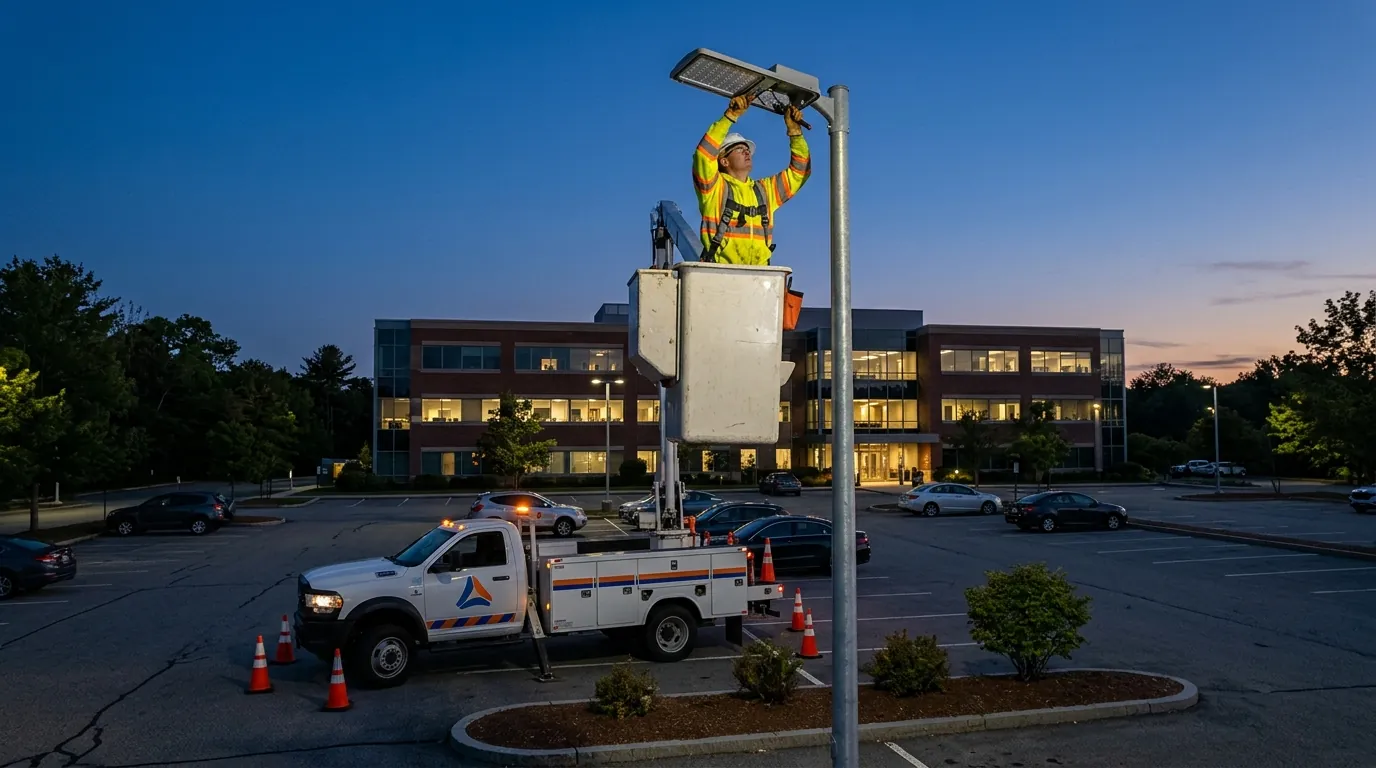
Dark poles in a lot are often a failed head, a dead photocell or a timer that drifted, but they can also be a buried feeder that has been damaged by plows or ground movement. We test at the base of the pole before replacing anything up top. LED pole heads and wall packs use far less power, and many accept a built-in photocell or motion dimming. Aiming matters too: a new head pointed wrong can light the neighbor's windows instead of the drive aisle, so we set shields and tilt to keep light where you need it.
Lighting controls
Energy codes for commercial spaces expect controls when lighting is replaced or a space is altered, so a retrofit is the natural time to add them. Occupancy and vacancy sensors turn off lights in empty offices, restrooms and storage rooms. Daylight sensors dim the rows nearest the windows. Larger floors may get a timeclock or a networked system that sets schedules by zone. The trade-off is commissioning: sensors that are placed badly or left at factory settings switch lights off on people sitting still, and that is the complaint we try to design out before the ceiling closes.
Ballasts failing across the office? Call and we will walk the space.
Call (617) 843-6591What sets the price of an LED retrofit
A lighting retrofit is priced per fixture and per control point, then adjusted for access and schedule. These are the things that move the number.
- Retrofit method. Tubes, retrofit kits and full fixture replacement are three different labor and material levels.
- Fixture count and spacing. A large open floor goes faster per fixture than many small rooms.
- Ceiling height and access. High bays, warehouse racking and lift rental add time and equipment.
- Controls scope. A few wall sensors are simple; zoned daylight and timeclock systems need layout and setup time.
- Exterior work. Pole heads need a lift, and a damaged underground feeder means trenching or a new run.
- After-hours scheduling. Night and weekend work to keep a business open costs more than daytime work in an empty space.
Tubes, kits or new fixtures
Three ways to convert a fluorescent troffer, and what each one leaves in your ceiling.
| Method | What changes | Best fit |
|---|---|---|
| Ballast-bypass LED tubes | Ballast removed, sockets rewired, housing stays | Newer fixtures in good shape, tight budget |
| Retrofit kit | LED panel and driver installed in old housing | Sound housings, worn sockets or lenses |
| New flat panel | Whole fixture replaced in the grid | Old fixtures, a full refresh or a long lease |
Permits and code on a Boston lighting job
Swapping fluorescent tubes for LED sounds like maintenance, yet bypassing ballasts, rewiring fixtures and adding occupancy sensors is electrical work. For a shop or office in Boston, that work goes through the city's Inspectional Services department for a permit and an inspection when it needs one. We plan those visits for early mornings or after closing so the inspector can see the ceiling without you shutting the doors. We also leave a marked set of fixture and circuit notes, which helps when you have to explain the change to a landlord or a facilities manager.
What a retrofit includes
- Fixture count and sample teardown before pricing
- Removal of ballasts, tubes and old lenses from site
- Relabeling of ballast-bypass fixtures
- Occupancy, vacancy or daylight sensors where planned
- Exterior heads, wall packs and photocells tested and aimed
- Circuit check at the panel for each lighting zone
- Permit and inspection on work that needs it
- Sensor timing set before we leave
From walkthrough to working lights
Walk the space
We count fixtures, open a sample and note ceiling type, circuits and existing switching.
Pick the method
Tubes, kits or new fixtures, with the controls the space needs, priced room by room.
Permit and schedule
We file where required and set work hours around your business.
Install and relabel
Fixtures converted, bypassed sockets marked, sensors mounted and circuits checked.
Set and hand over
Sensor timing and daylight levels adjusted on site, with old ballasts and tubes taken away.
Commercial lighting questions
Tubes are cheapest and fastest. Retrofit kits or new panels cost more but replace aging sockets and wiring too. If the fixtures are decades old or the sockets crack when touched, we usually recommend kits or new fixtures.
Yes. Most retrofits run at night or on weekends, room by room, so the space is usable every morning.
When lighting is replaced or a space is altered, the energy code generally expects automatic shutoff and other controls. We tell you what the specific space needs before work starts.
Fluorescent tubes contain mercury and some older ballasts need special handling. We remove them from site with the job rather than leaving them in your dumpster.
Sometimes. It can also be a photocell, a timer, a breaker or a damaged underground feeder. We test at the pole base before buying new heads.
It can if the driver and dimmer do not match. We check the dimming type of each fixture against the controls before installing.