Updated October 2026
Straight answer
Electrical code violation repairs in Boston usually start with a home inspection report listing items like double-tapped breakers, open junction boxes, missing GFCI protection or exposed splices. We review each line, confirm the problem in person, correct it to the 2023 NEC as Massachusetts amends it, and pull a permit for any work that needs one.
Sorting a write-up into real fixes and judgment calls
Inspection write-ups vary a lot in precision. Some items are real hazards, some are cosmetic, and a few turn out to be wrong once an electrician looks at the actual installation. Treating every line as a must-fix wastes money, while ignoring a real one can cost you at the closing table. We start by sorting the list so you know which corrections matter for safety and which are judgment calls.
Most items are small and fast on their own: a cover plate, a cable clamp, a breaker that needs its own slot. Together they can add up to a day of work in an older house, and they often point to a pattern, such as a previous owner's basement wiring, that deserves a closer look. We fix the listed items and tell you if the pattern suggests more.
Violations we correct most
Home inspection write-ups
Buyers and sellers usually bring us a report with a short electrical section and a deadline. We walk the house with the report, confirm each item and put the work into one visit where possible. Typical lines include missing GFCI protection in a kitchen or bath, reversed polarity at outlets, ungrounded three-prong outlets, open knockouts in the panel and cables without clamps where they enter a box. For each item we note what we found and what we did, which gives the other party something concrete rather than a general statement that the wiring was fixed.
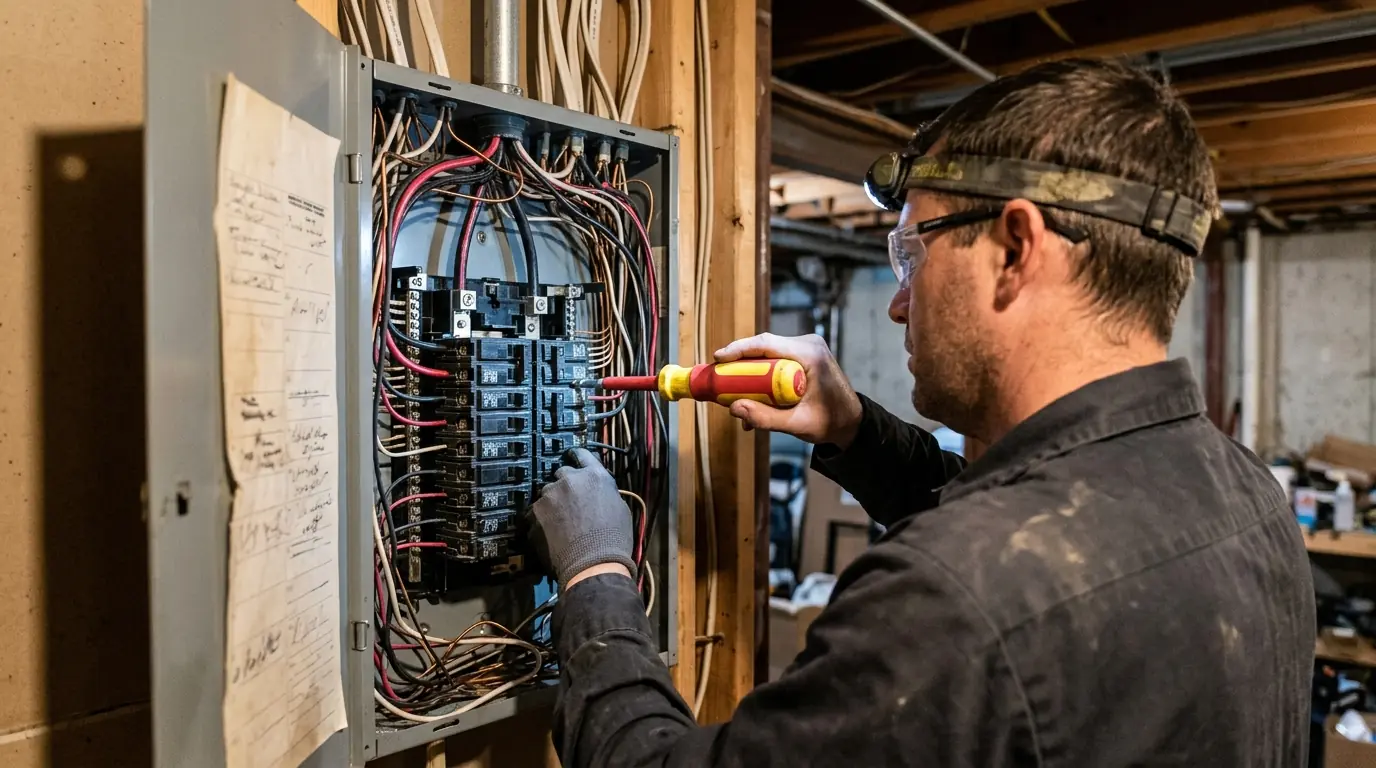
Open junction boxes and splices
Splices taped together above a ceiling, or a junction box with no cover, show up constantly in basements and attics. The connections aren't protected from damage, and an open box lets heat or a spark reach framing and dust. The fix is to put every splice inside an approved box, secure the cables with clamps, install a cover that stays accessible and remake any connection that looks heated or loose. When a splice is buried behind a finished wall, we have to bring it to an accessible spot, which can mean a small opening and a blank cover plate where it lands.
Double-tapped breakers
A double tap is two wires under a breaker terminal built for one. The second wire can loosen and overheat, and it usually means a circuit was added without room in the panel. Some breakers are listed for two conductors, so not every double tap is a violation, and we check the breaker marking first. Where it's a problem, we pigtail the two wires to a single lead if the combined load allows, move one circuit to its own breaker, or use tandem breakers if the panel accepts them. A panel with no space left may point toward a subpanel or a larger panel.
Inspection report full of electrical items? Call and we will sort it.
Call (617) 843-6591What decides the cost of corrections
Code corrections are priced item by item, and you see the full list with costs before work starts.
- Number of items. A short list handled in one visit costs far less per item than scattered calls.
- Panel space. Double taps in a full panel may need tandems, a subpanel or panel work.
- Access to splices. Buried junctions behind finished surfaces take longer to reach.
- Permit needs. Items that require a permit add filing and an inspection visit.
- Patterns found. A run of amateur wiring may need more than the listed fixes.
- Deadline. Fitting the work in before a closing date can affect scheduling.
The code and the permit behind each fix
Boston home inspection reports tend to flag the same handful of items, and most trace back to how these houses grew. Decades of additions, a basement finished on a weekend, a porch light run by a previous owner: each left splices outside boxes, open junction boxes or cord wiring stapled to joists. Damp basements add corroded boxes and outlets near the floor that ought to be protected. We sort the write-up into items that are real hazards and items that are notes, fix the hazards properly, and give you a clear account of what changed for your buyer or lender.
What the correction visit covers
- Line-by-line review of the electrical section
- On-site confirmation of each item
- Corrections to splices, boxes, clamps and covers
- Double taps resolved to the panel listing
- GFCI and polarity corrections
- Permit filing where the work requires one
- A written record of each correction
How long code corrections take
A typical list of five to ten small items fits in one visit. Longer lists, or items that involve panel space or buried splices, can run to a second day. If the work needs a permit, the city inspection adds time beyond our visit, so tell us your closing date when you call and we'll plan backward from it.
From inspection report to closed item
Read the report
We go through each electrical line and ask about your closing date.
Confirm on site
Every item is checked in person, and anything that isn't an actual violation is noted.
Correct in one visit
Fixes are grouped to finish as quickly as the list allows.
Permit and inspection
Work that needs a permit is filed and inspected.
Item-by-item record
You get a list of what was found and done for each line.
Code violation repair questions
Not in most cases. Some items are real hazards and some are recommendations. We tell you which is which so you and the other party can decide what to correct.
No. Some breakers are listed for two wires. If the breaker isn't, two wires under one terminal is a problem and needs correcting.
Usually, if you call with some time to spare. We group the work into as few visits as possible and plan permit inspections around your date.
You get a written record listing each item and its correction. Permitted work also has a city inspection on record.
It happens. We note what we found and why it isn't a violation, which you can share with the other party.
That's a negotiation choice. Knowing the real scope helps, so we can describe what each item involves before you decide.