Updated October 2026
Straight answer
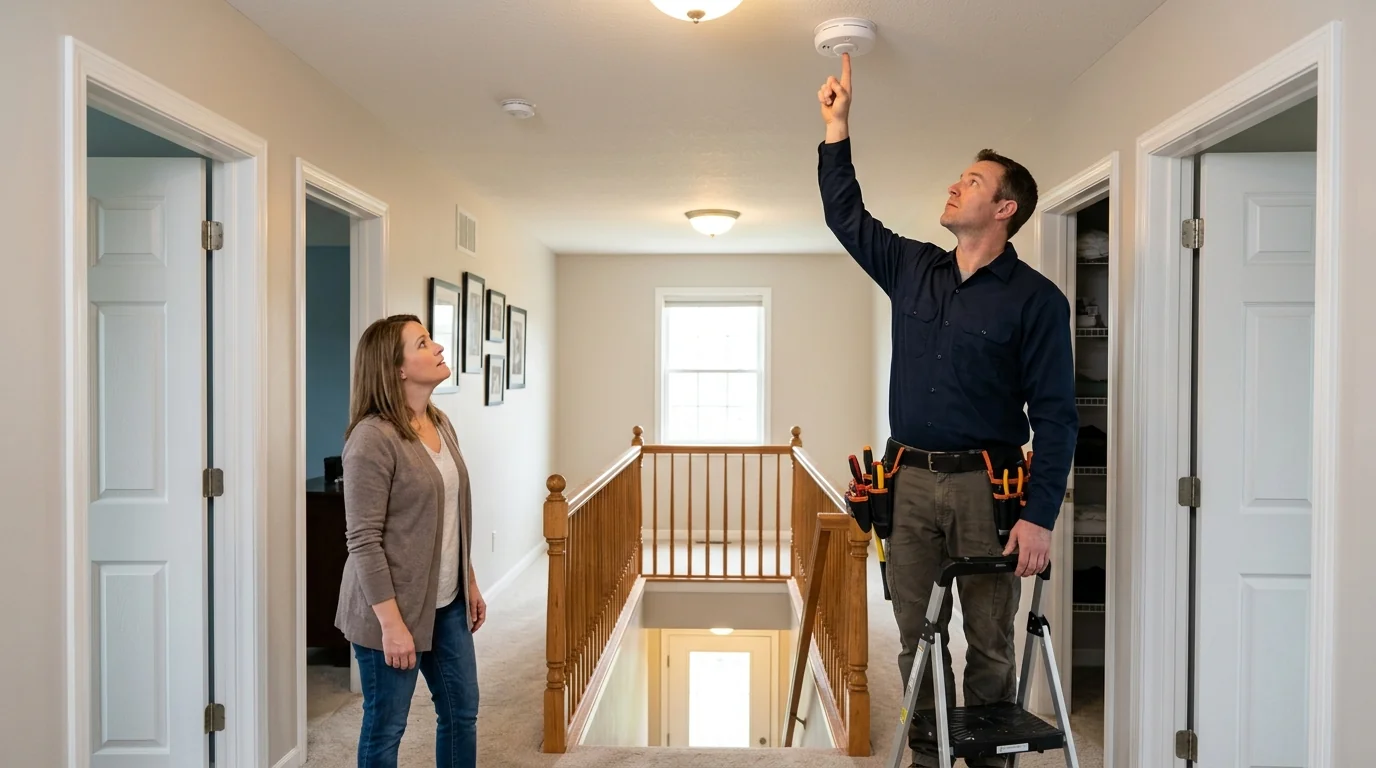
Smoke and CO detector installation in Boston usually means hardwired alarms with battery backup, interconnected so one alarm sets off all of them. Before a Massachusetts home changes hands, the local fire department has to issue a smoke and CO certificate of compliance, and alarm placement, type and age decide whether a house passes. We install, interconnect and test each unit.
What the alarm job includes
- A check of every existing alarm and its manufacture date
- New hardwired or sealed battery alarms where needed
- Interconnect wiring or wireless linking
- Combination smoke and CO units where they suit the location
- Photoelectric units near kitchens and baths
- A test of every alarm sounding the full system
- A list of alarm locations and dates for the inspection
Why interconnected alarms matter
A detector stuck to the ceiling with a nine volt battery protects one room, and only while the battery lasts. Hardwired alarms run on a household circuit with a battery for outages, and a third wire, or a wireless link, ties them together so smoke in the basement sounds the alarm outside the bedrooms. That interconnection is the single most useful upgrade for a house with several floors.
Alarms also age out. Most smoke alarms are meant to be replaced about ten years after manufacture, and many CO alarms sooner, with the date printed on the unit. When we replace alarms we check the date on every one, confirm the wiring at each box, and keep the system on one brand, because interconnect signals from different brands generally don't work together.
Alarm work we do most
Hardwired interconnected alarms
Running new interconnect wire between floors in an older house means fishing cable through plaster, closets and attic space, so we plan the route before cutting anything. Where a wired route is impractical, wireless interconnect alarms powered by the existing circuit, or sealed long-life battery units that link by radio, can tie the system together with far less disruption. Fire departments look at what the house is required to have, which depends on when it was built or renovated, so we confirm the target before choosing a method. The trade-off is straightforward: wired interconnect is the most dependable link, and wireless is the least intrusive.
Home sale certificate prep
Selling a house means a fire department inspection of the smoke and CO alarms before the certificate is issued, and a failed inspection costs days you may not have. Common reasons for failing include alarms past their date, a level with no alarm, CO alarms missing near sleeping areas, and alarms that aren't interconnected where they should be. We walk the house ahead of the inspection, replace or add what is needed, and test every unit so it sounds across the system. Requirements vary with the age of the house and its renovation history, so we check those before buying parts.
Combination smoke and CO units
Combination alarms detect both smoke and carbon monoxide in one housing, which cuts the number of devices on a ceiling and simplifies later replacement. They make sense outside bedrooms and on levels where both are needed. They aren't the right choice everywhere: near kitchens and bathrooms, photoelectric smoke sensors cut false alarms from cooking and steam, and inspectors can expect particular sensor types in particular spots. The CO sensor in many combination units also expires before the smoke sensor would, so the whole alarm goes on the shorter replacement schedule. We match each location to the right unit.
Selling soon or alarms chirping? Call and we will sort the alarms.
Call (617) 843-6591The fire department inspection at sale
Selling a house in Massachusetts means the fire department has to sign off on the smoke and CO alarms before the transfer, and the closing waits on that paperwork. In the city, Boston Fire puts out a guide written for sellers of one and two family homes that spells out what its inspectors look for. We work from that guide when we prepare a house: alarm locations, the right type near kitchens and bedrooms, hardwired units where the house calls for them, and interconnection. The goal is a single inspection visit, not a return trip that pushes your closing date.
What sets the cost of alarm work
Alarm work is priced on the number of units, the type of interconnect and how hard each location is to reach.
- Number of alarms. Each level, bedroom area and hallway location adds a unit.
- Wired or wireless link. Fishing interconnect wire through plaster takes more time than linking wireless units.
- Existing boxes. Replacing hardwired alarms on existing boxes is faster than adding new locations.
- Alarm type. Combination, photoelectric and sealed battery units vary in cost.
- Sale deadline. Work squeezed in before a fire inspection date can affect scheduling.
How an alarm installation runs
Confirm the requirement
We check what the house needs based on its age, renovations and town.
Plan locations
Alarm spots are marked by level, bedroom area and distance from kitchens and baths.
Install and interconnect
Units are mounted and wired or linked, on one brand per system.
Test the system
Every alarm is tested to confirm it sets off the others.
Hand over
You get the date and location of each unit to show the fire inspector.
Wired, wireless or sealed battery
How the alarms are powered and linked is the main choice, and each option has a fit.
| Option | Best fit | Trade-off |
|---|---|---|
| Hardwired, wired interconnect | Open walls, renovations, new circuits | Fishing wire through plaster in finished rooms |
| Hardwired, wireless interconnect | Existing alarm boxes on separate floors | Every unit must stay on one brand and system |
| Sealed long-life battery, wireless | Finished rooms where wiring is impractical | The whole unit is replaced when the battery ends |
Smoke and CO alarm questions
It depends on when the house was built or last renovated. The fire department sets what the certificate requires, and we confirm it for your house before installing anything.
Generally not on one interconnected system. Interconnect signals differ between brands, so mixed alarms may not set each other off.
Usually a low backup battery or an alarm at the end of its life. A unit past its date chirps even with a fresh battery and needs replacing.
Near sleeping areas and on each level is the usual practice. Your town fire department's guide states what the sale inspection checks.
As early as you can. That leaves time to replace units and fix any wiring before the inspector arrives.
Yes, where that type is accepted for the location. Near kitchens and baths, a photoelectric smoke unit is often the better choice.