Updated October 2026
Straight answer
An electrical safety inspection in Boston is a hands-on review by an electrician: we remove the panel cover, check the service and grounding, test a sample of outlets, and look for knob and tube, aluminum branch wiring, overfused circuits and open splices. You get a written list sorted into hazards, near-term repairs and items to plan for.
What the inspection covers
- Panel cover removed and each breaker checked against its wire size
- Service entrance, meter base and grounding reviewed
- Outlet sampling for polarity, ground and GFCI function
- Accessible attic and basement wiring examined
- Notes on knob and tube, aluminum wiring or fuse panels
- Smoke and CO alarm locations noted
- Written findings sorted by urgency
What an electrician checks that a general inspection skips
A general home inspector covers the whole house in a few hours and flags electrical concerns for a specialist. Our inspection is that specialist visit. We look at the panel brand and condition, how each breaker matches its wire, whether the service and grounding are sound, and what kind of wiring runs to the outlets. In an older house, those answers decide whether you're looking at a few repairs or a rewire.
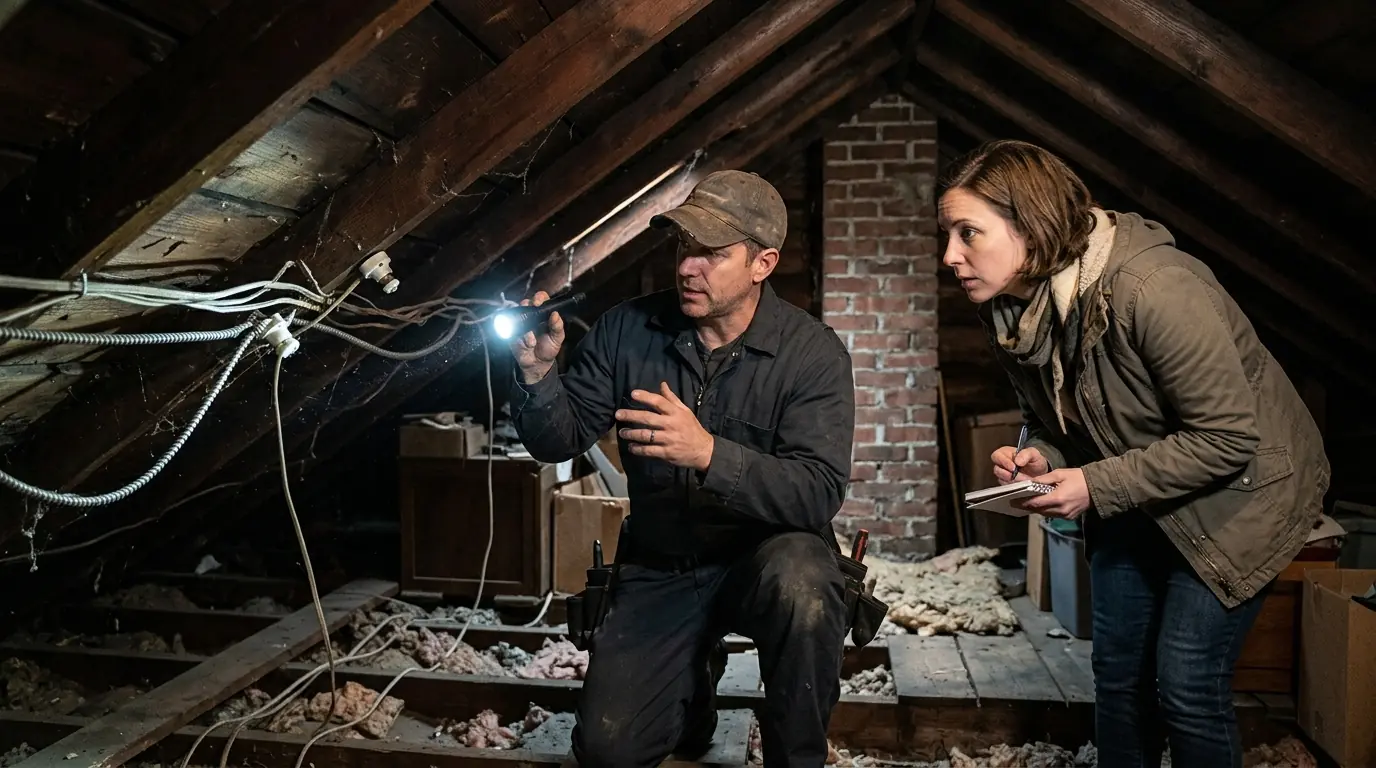
We report what we can see and test without opening finished walls. That's a real limit, and we state it in the findings. Where an accessible attic or basement shows the wiring types, we note them, and where we suspect something hidden, such as live knob and tube in closed walls, we say so and explain how to confirm it.
Inspections for buying, insuring and upkeep
Home purchase walkthrough
During an inspection contingency, a buyer needs to know what the electrical system will take to bring up to a safe standard. We focus on the items that matter most to that decision: panel type and capacity, the age and kind of branch wiring, grounding, and anything that's a present hazard. The findings separate urgent work from things you can plan over a few years, which helps when you negotiate. For each item we explain what the repair involves and what drives its cost, so you can weigh it before the deadline instead of guessing from a one-line note.
Insurance wiring review
Insurers often ask about panel brands, fuses, knob and tube and aluminum branch wiring before writing or renewing a policy on an older house. Our review answers those questions with what we actually found, room by room where it matters, and notes any items already corrected. If the insurer has its own form, bring it and we'll fill in the electrical sections from the inspection. We can't tell you what an insurer will accept, since each one sets its own rules, but a clear, specific report is what an underwriter needs to make that call.
Thermal scan of the panel
A thermal camera shows heat the eye can't. Scanning a loaded panel reveals loose lugs, failing breakers and overloaded conductors as warm spots before they scorch. The scan needs real load to be useful, so we ask you to run major appliances while we look. It's a quick add-on to a standard inspection and a sensible routine check for owners of older panels or multi-family buildings with several meters. The trade-off is that the camera only sees surfaces. It finds heat at the panel, not a bad splice buried behind plaster.
Closing on an older house? Call and book the electrical inspection.
Call (617) 843-6591Old houses and the insulation question
Buyers planning an energy upgrade should know one detail before closing. When our inspection turns up knob and tube that still carries current, Mass Save crews will hold off on blowing insulation into those attics and walls until the circuits are retired or replaced. That changes the order of work after you move in, and sometimes the budget. So when we inspect, we do more than note porcelain knobs in the attic. We test whether those runs still carry power and which rooms they feed, so you know whether the electrician or the insulation contractor goes first.
What sets the price of an inspection
Inspection cost follows the size of the building and what you want covered, and you know the scope before we start.
- Building size. A single-family house takes less time than a three-unit building with several panels.
- Panels and meters. Each panel cover comes off and gets a full review.
- Thermal scan. Adding the scan adds time with appliances running.
- Access. Clear basements and open attic hatches make the visit faster than boxed-in panels.
- Report format. An insurer form or a detailed room-by-room list takes longer to prepare.
How the inspection visit runs
Set the scope
We confirm what the inspection is for and any deadline you're working against.
Service and panel
Meter, service cable, grounding and the open panel are examined first.
Circuits and devices
We test a sample of outlets in each room and check accessible wiring.
Attic and basement
Exposed runs show the wiring types and any old splices.
Written findings
You get a list sorted by urgency, with what each repair involves.
Home inspector or electrician?
A general home inspection and an electrician inspection answer different questions.
| Item | General home inspection | Electrician inspection |
|---|---|---|
| Panel | Brand and visible defects noted | Every breaker matched to its wire |
| Wiring type | Flagged where visible | Identified and traced in accessible areas |
| Testing | Sample outlets | Outlets, grounding and an optional thermal scan |
| Outcome | Recommends further evaluation | Repair list with what each item involves |
Electrical inspection questions
If the home inspector flagged the panel, the wiring type or grounding, yes. Their job is to spot concerns. Ours is to tell you what they are and what fixing them involves.
Tell us the deadline when you call. Phones are answered 24/7, and we schedule inspections with that date in mind.
No. We inspect what is accessible without damage: the panel, boxes we can safely open, attics and basements. The findings state clearly what we could not see.
Heat at loose lugs, failing breakers and overloaded wires in the panel. It needs appliances running to show anything, and it can't see through finished walls.
We note where they are and whether they appear to be hardwired. The fire department inspection at sale is separate and sets its own requirements.
Yes. The findings are yours to use however you like, and if you want us to do the work, we quote it separately.