Updated October 2026
Straight answer
Adding an outlet in a Boston house usually means tapping a nearby circuit with spare capacity, or running a new one when the room is already loaded, then fishing the wire through plaster to the new spot. We check the circuit before we tap it, use old-work boxes that clamp to lath, and install tamper-resistant outlets as the current code expects.
Why old rooms need more outlets than they have
A room with one outlet near the door ends up running on extension cords and power strips, and that is where overheating starts. Modern code spaces receptacles along the walls so no point on a wall is far from one. Houses wired a century ago followed no such rule, and many rooms still have a single outlet at baseboard height on one wall.
The job is mostly about where the power comes from. Tapping the closest outlet is quick, but if that circuit already feeds a bedroom space heater, more load just moves the tripping problem. We test what is on the circuit first. If there is room, we extend it. If not, we run a new circuit, which also lets us add AFCI protection where the code expects it.
Indoor, USB-C and outdoor outlets we add
Adding outlets to old rooms
In a plaster room, we place new outlets where the wire can reach without tearing up the wall: below a window, beside a door casing, or on a wall the cable can drop into from the floor above or rise into from the basement. We cut a clean opening sized to an old-work box, fish the cable through, and use boxes with clamps that grip the lath. Baseboard runs are another option, where we pull the trim, run cable behind it and set the outlets low. The trade-off is placement, since a spot directly over a stud or a chimney chase may need to move a few inches.
USB and USB-C outlets
A combination outlet with USB-C ports frees up the receptacles that phone and tablet chargers usually take over, and it fits in a standard box. We suggest models with enough charging output for current phones and laptops, since low-output USB ports charge slowly and frustrate people. These devices are deeper than a plain outlet, so in an old shallow box they may need a new box to fit safely. They also cost more than a standard receptacle, so most people put them at a bedside, a kitchen desk or beside the sofa rather than at every outlet in the house.
Outdoor weatherproof outlets
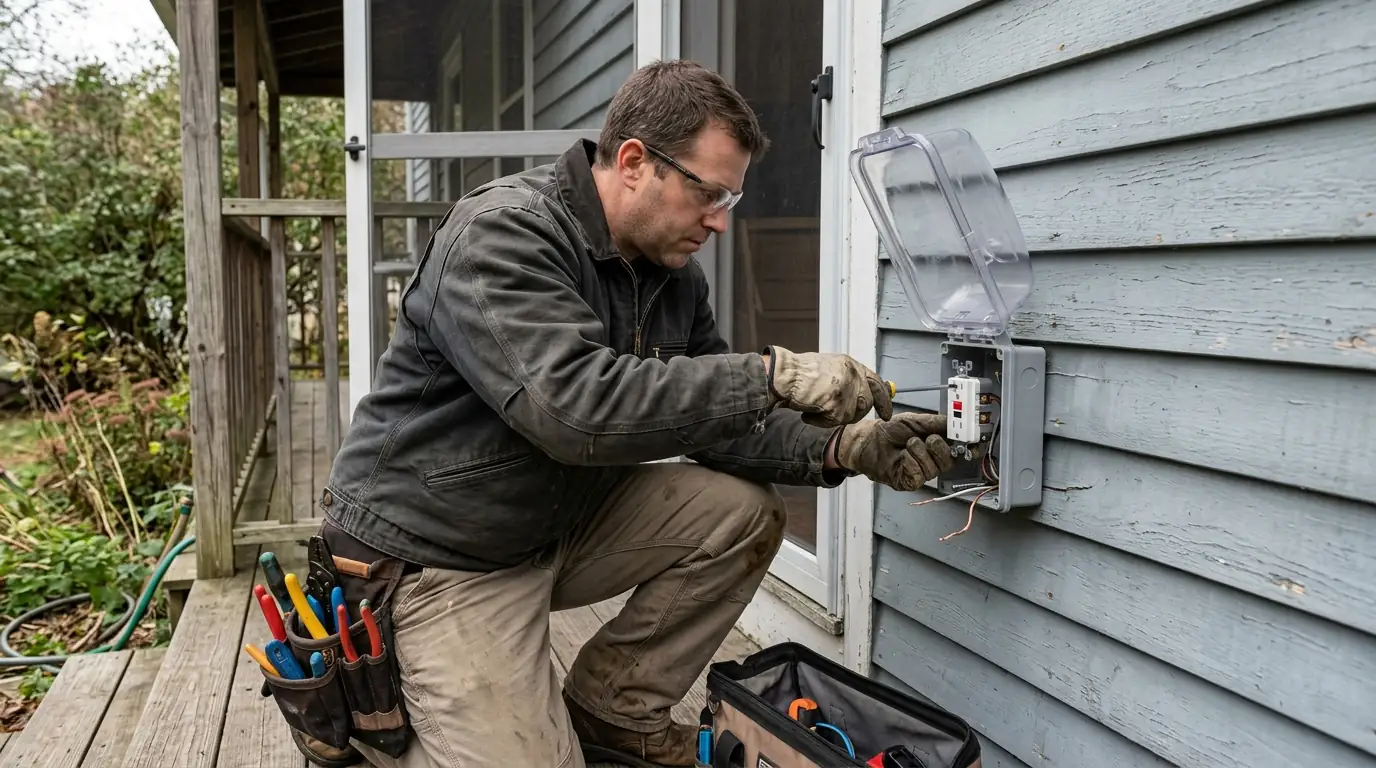
Outdoor outlets for holiday lights, a pressure washer or a patio heater need GFCI protection, a weather-resistant receptacle and an in-use cover that stays closed while something is plugged in. The code also expects a receptacle at the front and back of a house. We mount the box tight to siding or brick, seal the penetration, and feed it from inside so no cable is exposed. On a porch or deck, we keep the outlet above standing water and away from the downspout. A flat cover that only seals when nothing is plugged in is the most common outdoor mistake we replace.
Living on power strips? Call and we will add the outlets you need.
Call (617) 843-6591What decides the cost of adding outlets
New outlets are priced per location, and the circuit and the wall do most of the deciding.
- Circuit capacity. Extending a lightly loaded circuit is quick, while a new circuit from the panel is more work.
- Wall type and path. Plaster over lath, brick party walls and fire blocking all slow the fishing.
- Number of outlets. Several outlets on one new run share the setup time.
- Device type. USB-C combination outlets and GFCI outlets cost more than standard receptacles.
- Outdoor mounting. Brick, stucco and vinyl siding each need a different box and seal.
Outlets in long, narrow Boston flats
Boston rooms were rarely wired for how people live now. Older plaster houses often have one outlet on a long wall and none on the wall where the desk or TV ends up, which is how extension cords end up under rugs. Adding outlets in those rooms is mostly a fishing job. We look for a route from the basement, the attic or a closet behind the wall, cut a small opening for the new box, and patch neatly. In damp basements and by exterior doors we use the protected, weather-rated devices those spots need.
What comes with each new outlet
- A load check on the circuit we extend
- Old-work boxes that clamp to plaster and lath
- Tamper-resistant receptacles indoors
- Weather-resistant GFCI outlets with in-use covers outside
- Sealed exterior wall penetrations
- A polarity and ground test on every new outlet
How an outlet gets added to a plaster wall
Pick the spots with you
We mark locations that suit your furniture and that the wire can reach.
Test the source circuit
We check the load on the circuit we plan to extend, or plan a new one.
Fish and set boxes
Clean old-work openings, cable fished through, boxes clamped to the lath.
Install and test
Tamper-resistant or weather-resistant devices fitted and tested for polarity and ground.
What to plan yourself and what to leave to us
Safe for a homeowner
- Mark where you want outlets with painter tape
- Note which breaker feeds the nearest outlet
- Clear furniture from the walls before we arrive
Leave to an electrician
- Extending a circuit from an existing outlet
- Cutting into plaster near hidden wiring
- Running cable through an exterior wall
- Anything in a box with old cloth-covered wire
An extension cord stapled along a baseboard is not a substitute for an outlet, since cords are not made for permanent wiring and can overheat under furniture.
Questions about adding outlets
You get one small opening, the size of the outlet box itself. The cable is fished from above or below through the wall cavity, so no other holes are needed unless framing blocks the path.
Yes, if that circuit has spare capacity and the wiring is in good shape. We check both first. Extending an old ungrounded or overloaded circuit just spreads the problem to a new spot.
At bedsides, desks and kitchen counters, yes. They free up receptacles and charge phones without adapters. Pick a model with enough output for the devices you actually use.
Yes. Outdoor receptacles need GFCI protection, a weather-resistant rating and an in-use cover that closes over a plugged-in cord.
The code calls for tamper-resistant receptacles in homes. Shutters inside the slots open only when both prongs push in together, which keeps keys and hairpins out of the contacts.