Updated October 2026
Straight answer
Outdoor lighting at a Boston home means fixtures rated for wet locations wherever rain or snow can reach them, outdoor outlets on GFCI protection, and cable buried at the right depth or run in conduit. Path lights are usually low voltage from a transformer; porch and security lights run on line voltage with sealed boxes behind them.
Fixtures and wire that hold up outdoors
Outdoor fixtures fail from water, not age. A porch light rated only for damp locations under a deep roof will fill with water on an open wall, and a mounting block without a gasket lets rain run straight into the box behind it. The first thing we check on any outdoor job is how exposed each fixture will be.
The second is the wire. Line voltage cable outside has to be rated for wet locations and buried or protected, and outdoor receptacles need GFCI protection and in-use covers. Low voltage landscape cable is far more forgiving, which is why it is the usual choice for path and garden lights.
Paths, security lights and porches
Path and garden lighting
Path and garden lights almost always run on low voltage. A transformer plugs into or wires to a GFCI protected outdoor outlet, and direct burial cable runs a few inches under the mulch to each fixture. Because the voltage is low, cables can be moved as beds change, and a nicked wire does not create a shock hazard. The planning is about voltage drop: long runs from one transformer leave the far lights dimmer, so we split runs or use heavier cable. A timer or photocell on the transformer turns everything on at dusk. The trade-off is brightness. Low voltage is right for guiding feet and lighting plants, not for flooding a driveway.
Motion security lights
Motion lights over a garage, driveway or back door run on line voltage, so they need a weatherproof box, a fixture rated for wet locations and a cable route into the house. The sensor setting matters more than the fixture. Pointed wrong, it triggers on every passing car or never catches someone at the gate. We aim it at the approach, set the sensitivity and hold time, and shield it from the street where needed so the neighbors are not lit up all night. LED floods use little power, so a fixture with a low dusk setting that brightens on motion is a good choice. A bypass switch inside lets you override it.
Porch and deck lighting
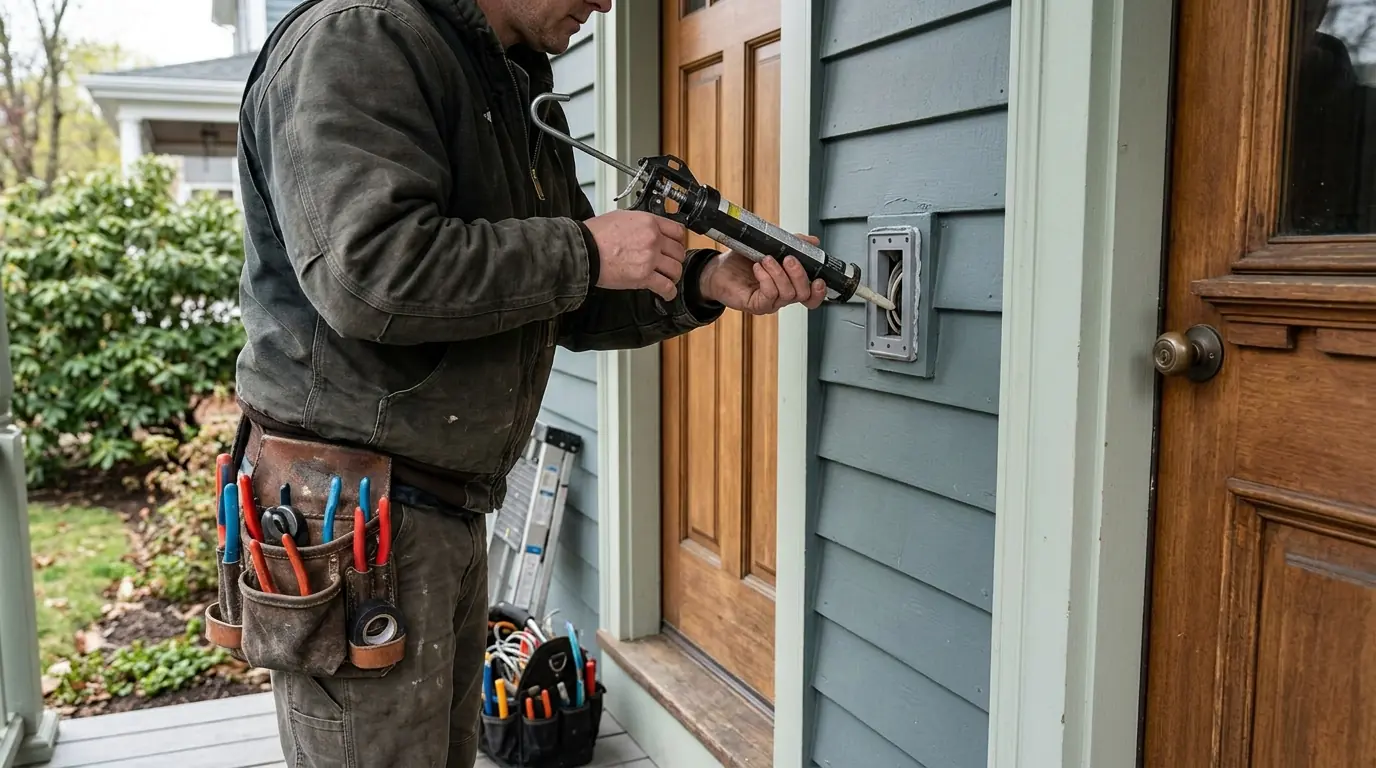
Porch lights usually replace an existing fixture on an exterior wall, and the fix that matters is behind it: a sealed mounting block or box, caulked on top and sides so rain cannot track in. Fixtures on open walls must be wet rated, while those under a deep roof can be damp rated. Deck lighting means riser lights in stairs and post cap lights, usually low voltage, with cable run under the decking. Any outlet on the porch or deck gets GFCI protection and an in-use cover that stays weathertight with a cord plugged in. If the deck is new, we coordinate with the builder so cable goes in before boards close the space.
Dark steps or a black back yard? We will light it with fixtures made for the weather.
Call (617) 843-6591What shapes the cost of outdoor lighting
Outdoor lighting cost depends on how far the power has to travel and how much ground or wall it crosses. These are the main factors.
- Low or line voltage. Low voltage path lights avoid trenching to code depth; line voltage fixtures need protected cable.
- Distance from the house. Lights far out in the yard mean longer cable runs and more voltage drop to manage.
- Wall material. Drilling brick or stone for a box takes more time than wood siding.
- Outdoor outlet. A transformer may need a new GFCI protected outlet with an in-use cover.
- Number of fixtures. Each path light, riser or flood adds a fixture and a connection.
- Controls. Timers, photocells, motion sensors and smart controls add parts and setup.
Low voltage or line voltage outside
Most homes end up with both: low voltage for paths and plants, line voltage for doors and security.
| Feature | Low voltage (path, garden) | Line voltage (porch, flood) |
|---|---|---|
| Wiring | Direct burial cable near the surface | Wet rated cable buried deeper or in conduit |
| Brightness | Soft, for steps and plants | Bright, for doors and driveways |
| Changes later | Easy to move fixtures | Fixed boxes, harder to relocate |
| Power source | Transformer on a GFCI outlet | Circuit from the house panel |
Historic district fixtures and street views
Lighting a front step on Beacon Hill involves a review board as much as an electrician. Anything you change on a street-facing facade in that historic district needs approval from its architectural commission first, so we wire after the fixture choice is settled, not before. Residents have argued for years about whether the old gas street lamps should go to LED, which says a lot about how closely people watch the color and glow of light on those blocks. We match color temperature to your approved fixture and run feeds out of sight, behind masonry or inside the vestibule.
How long outdoor lighting takes
A porch or motion light swap on an existing box is usually done in a couple of hours. A low voltage path system with a new outdoor outlet and transformer is often a day. Line voltage lights far out in the yard take longer because of trenching, and frozen ground in winter can push that part of the work into spring.
How an outdoor lighting job runs
Walk the property at dusk
We look at steps, paths, doors and dark corners when the light problem is visible.
Choose fixtures and voltage
Wet or damp rating per location, low voltage for paths, line voltage for security.
Run the wire
Cable buried or protected, entry points through the wall sealed.
Mount and seal
Fixtures set on gasketed blocks or boxes and caulked against rain.
Aim and set
Path lights adjusted, motion sensors aimed, timers and photocells set at night.
Outdoor lighting questions
Any fixture rain or snow can reach directly needs a wet location rating. Fixtures under a deep porch roof can be damp rated. We check each spot.
Low voltage cable carries far less shock risk than house wiring, which is why it can sit just under the mulch. The transformer still plugs into a GFCI protected outlet.
The sensor is aimed at the street or set too sensitive. We re-aim it at the approach, adjust sensitivity and add a shield if needed.
Yes. We add a GFCI protected outdoor outlet with an in-use cover that stays closed while the transformer is plugged in.
In districts like Beacon Hill, exterior changes visible from the street go before the architectural commission. Get the fixture approved first, and we will wire it to suit.
Sealed, wet rated fixtures on gasketed boxes usually do. Most winter failures come from water entering an unsealed box or a cracked fixture lens.