Updated October 2026
Straight answer
An electrical panel upgrade in Boston usually means moving a 100 amp or smaller service to 200 amps, and the panel is only part of it. The meter socket, service entrance cable and grounding often change too, and the utility reconnects only after the city inspector signs off. We run a load calculation first so you upgrade for what you will actually add.
Why houses outgrow their panel
Most panel upgrades start with a plan, not a failure: a heat pump, an induction range, an EV charger or a finished basement that the existing service cannot carry. Some start with a panel that is simply full, with tandem breakers doubled up and no open spaces left. Either way, the first question is how much the house will draw at peak, and that is a calculation, not a guess.
The NEC lays out how to add up a dwelling load in Article 220: general lighting by square footage, small appliance and laundry circuits, then fixed appliances, heating and cooling at their nameplate ratings, with demand factors applied. Done honestly, that number tells you whether 200 amps is needed, whether 150 would do, or whether a load management device can hold off the upgrade entirely.
What a service upgrade replaces
100 to 200 amp service
A 100 amp service was standard for decades and still runs plenty of houses well, until you add electric heat, a heat pump or a second large appliance. Moving to 200 amps means a new panel with a 200 amp main, larger service conductors and usually a new meter socket rated for the higher current. We move every existing circuit onto the new bus, replace breakers that do not fit, and label the directory as we go. The trade-off is cost and a day without power, against capacity that a full electrification plan will actually use. If the load calculation says 150 amps covers your plans, we tell you so.
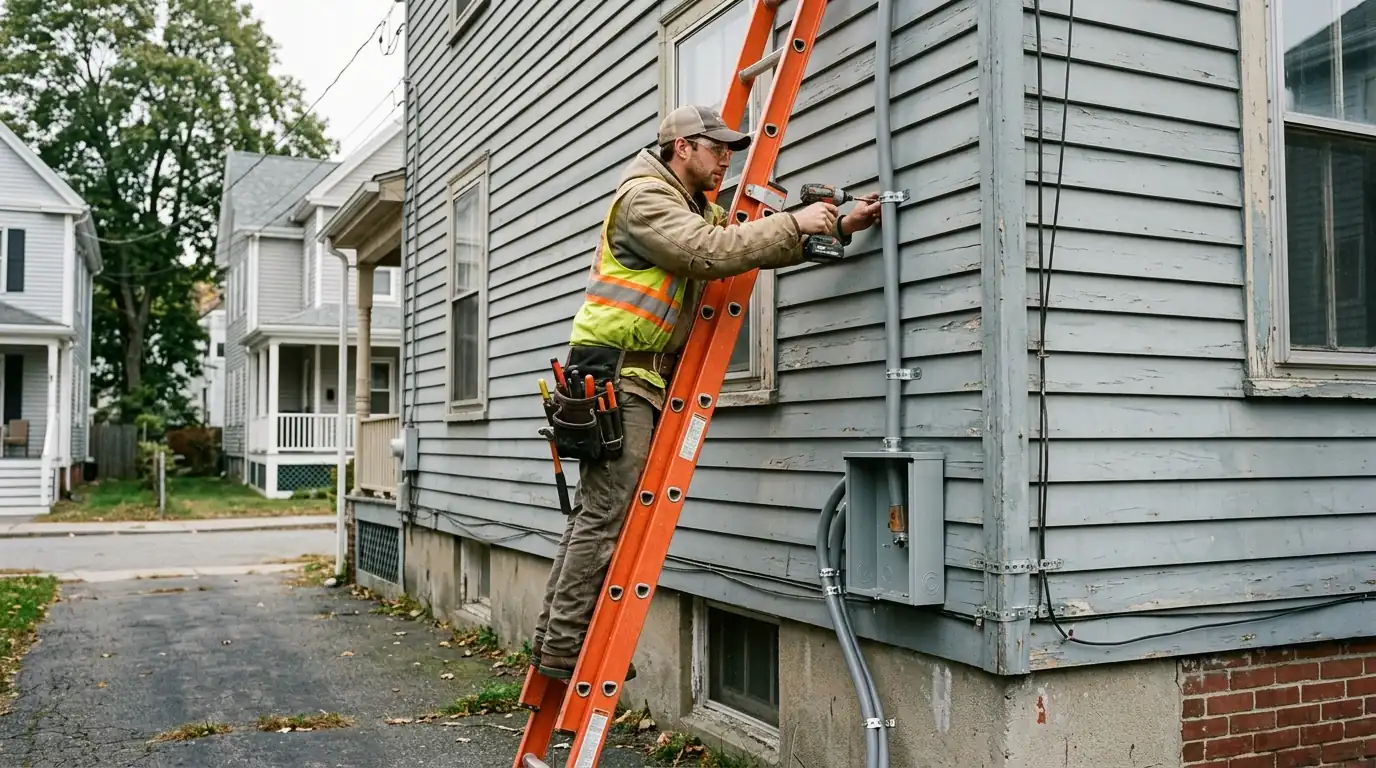
Meter socket and service entrance cable
The service entrance is everything from the weatherhead or utility connection point down to the main breaker: the conductors, the meter socket and the cable or conduit between them. On older houses the cable jacket is often cracked from decades of sun, and the meter socket may be a 100 amp unit that cannot take larger conductors. We replace the socket and run new service entrance conductors sized for the new main, sealed where they pass through the wall. When the drop is overhead, we check that the mast height and attachment still meet what the utility expects. This is the part of the job that surprises homeowners most, because it happens outside.
Utility coordination and inspection
A service upgrade involves two outside parties. The utility disconnects the service so we can work on the meter side, then reconnects once the new equipment passes inspection. In Boston that utility is Eversource. The city wire inspector checks the new panel, service equipment, grounding and bonding before power is restored. We file the permit, request the disconnect, and set the work day so the inspection and the reconnect land as close together as both schedules allow. Most of the waiting on a panel upgrade sits on that calendar, not on the electrical work itself.
Planning a heat pump or EV charger? Get the load calculation first.
Call (617) 843-6591What sets the price of a panel upgrade
A panel upgrade is priced after we see the service from the point of attachment to the panel. These are the items that move it most.
- Service size. Going to 200 amps costs more than staying at 100 or moving to 150, in conductors, socket and main breaker.
- Meter and mast condition. A sound meter socket and mast can sometimes stay; a corroded or undersized one gets replaced.
- Panel location. Moving a panel out of a closet or bathroom adds feeder work and circuit extensions.
- Circuit count. More circuits to land, extend or convert to AFCI and GFCI protection means more breakers and labor.
- Grounding and bonding. Older houses often need new ground rods and a water pipe bond to meet current code.
- Load management option. If a load management device can stand in for the service upgrade, the scope changes completely.
Permits and utilities from Boston to Danvers
Who handles the meter side of a panel upgrade depends on the town. Most of Boston is on Eversource, but Danvers runs its own municipal electric department, and its service policy handbook governs how new and larger services get connected there, so we read it before we size the job. Money can also shift the plan. Some Massachusetts electrification programs this year help pay for panel upgrades, but each program sets its own qualifying terms. Check what you qualify for before you sign anything, because the answer can change which panel and service size make sense.
What a panel upgrade includes
- Load calculation for current and planned equipment
- Permit filing and inspection scheduling
- Utility disconnect and reconnect coordination
- New panel with a main breaker sized to the service
- Meter socket and service entrance conductors where needed
- Grounding electrode and water pipe bonding checked
- Every circuit tested, landed and labeled
- Old panel and equipment removed
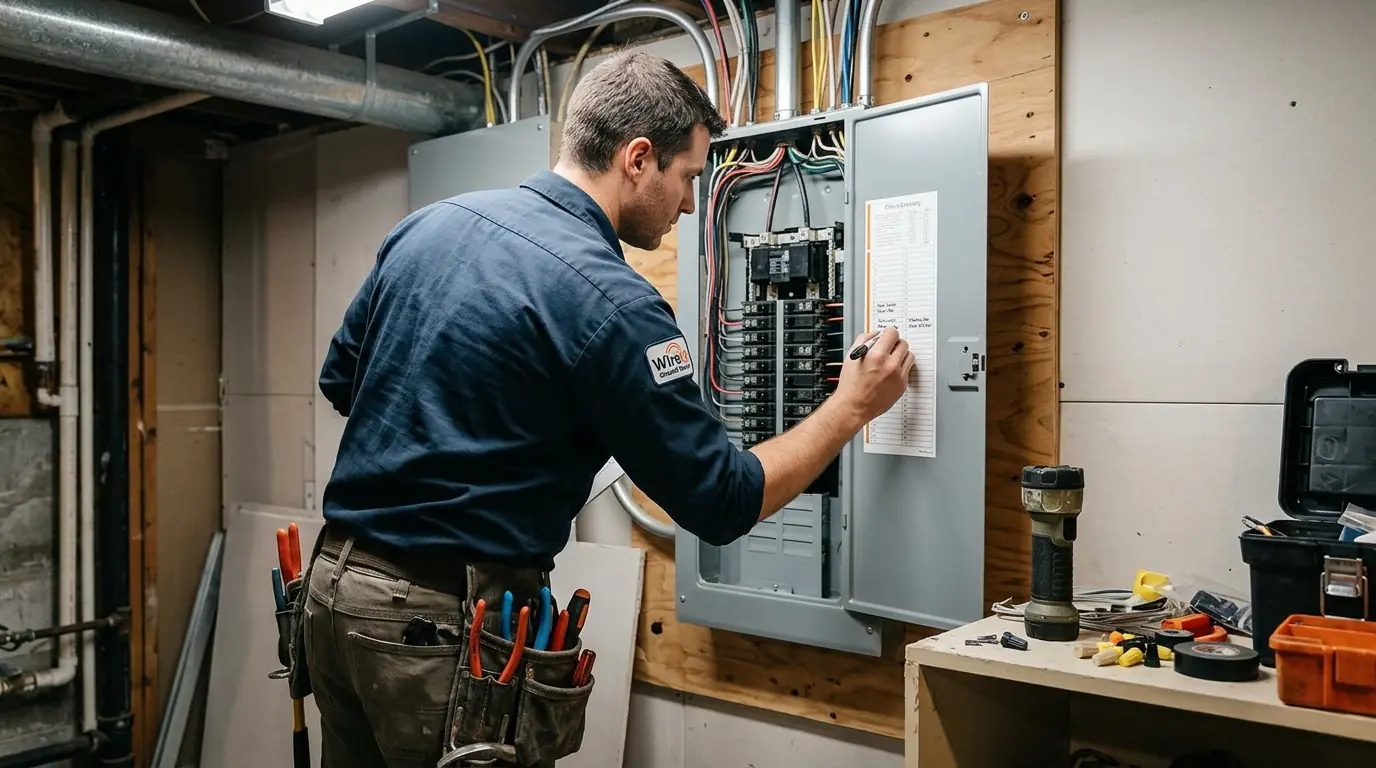
How long the house is without power
The electrical work on a typical panel and service upgrade fits in one long day. What stretches the timeline is everything around it: the permit, the utility scheduling the disconnect, and the inspection before reconnect. Plan on the power being off from morning into the afternoon, and allow some lead time to line up the utility and the inspector on the same day.
From load calculation to reconnect
Load calculation
We list what you have and what you plan to add, and run the numbers before choosing a size.
Permit and utility request
We file the permit and request the disconnect and reconnect with the utility.
Service and panel swap
Power off, old equipment out, then new socket, service conductors, panel and grounding in.
Circuits landed and labeled
Every circuit tested, moved to the new bus and named on a clear directory.
Inspection and reconnect
The wire inspector signs off and the utility restores power to the new service.
Panel upgrade questions from Boston homeowners
A load calculation tells you. We add up existing loads and planned ones like a heat pump or EV charger using the NEC method. If the result fits within 150 amps or a load management plan, we say so before you spend on more.
For most of the working day, yes. The utility disconnects in the morning and reconnects after the inspection. Refrigerators and freezers hold their temperature well if the doors stay closed.
The meter itself belongs to the utility. The meter socket it plugs into is yours, and on a 200 amp upgrade it usually has to be replaced with one rated for the new service.
Often, yes. Panels in bedroom closets or bathrooms are common in older houses and do not meet current location rules. Moving one means extending circuits to the new spot, which adds time and cost.
Only if the panel or service is the cause. Flickering can also come from a loose neutral on the utility side or a bad connection on one circuit, and we test for those before recommending a new panel.
Not necessarily. Code applies AFCI and GFCI rules to circuits that are new, extended or modified. Circuits moved over unchanged are treated differently, and we walk you through which ones the inspector will expect protected.