Short answer
Aluminum branch wiring is a concern because its connections at outlets, switches and splices can loosen, oxidize and overheat over time. The accepted fixes are rewiring with copper or connecting short copper pigtails to each aluminum wire using connectors rated for joining the two metals. Ordinary twist-on wire nuts and standard devices are not an acceptable repair.
Where aluminum branch wiring shows up and how to spot it
For a stretch of years in the 1960s and 1970s, when copper prices climbed, some builders used solid aluminum wire for the regular 15 and 20 amp circuits that feed outlets and lights. Houses and condos from that period, along with additions and finished basements built then, are where it usually turns up. Most older Massachusetts housing predates that era, so it is less common here than knob and tube, but it does appear.
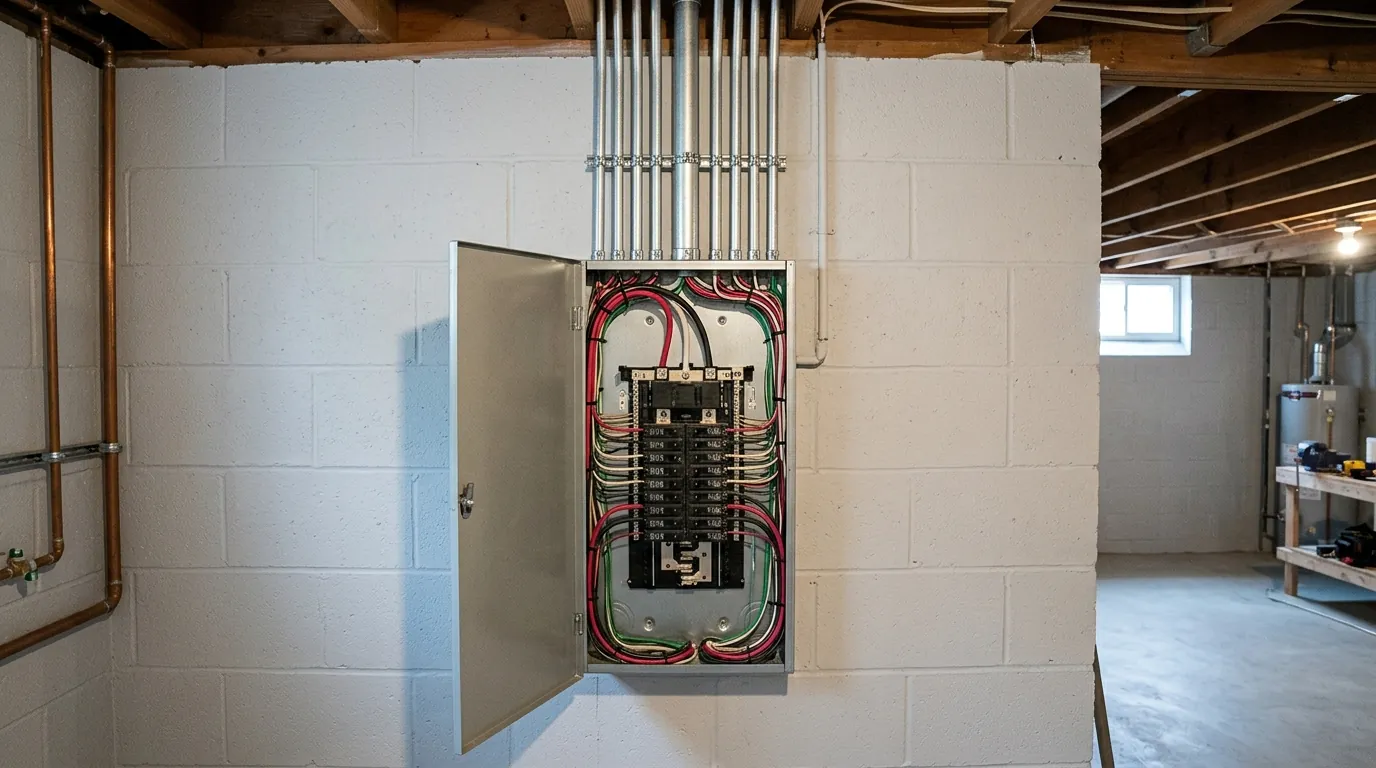
To check, look at the cable jackets where they enter the panel or in an unfinished basement. Aluminum cable is often marked AL or ALUMINUM along the jacket. At the panel, the wire ends on the small breakers will look dull silver rather than copper colored. Do not pull devices out of energized boxes to look; the panel and exposed cables tell you enough.
- Cable jacket printed with AL or ALUMINUM
- Silver colored conductors on 15 and 20 amp breakers
- Outlets or switches that feel warm or discolored
- Lights that flicker with no obvious bulb or fixture cause
Why the connections are the weak point
Aluminum behaves differently from copper at a screw terminal. It expands and contracts more as it heats and cools, and under steady pressure it slowly flows away from the screw, a property called creep. Each cycle loosens the joint a little. At the same time, aluminum forms an oxide layer on its surface that resists current. A loose joint with oxide on it heats up, the heat speeds the oxidation, and the joint gets worse.
That cycle can run for years without anyone noticing, then show up as a warm cover plate, a smell of hot plastic, a flickering light or an outlet that stops working. The danger is that the heat sits inside a box in a wall, where you cannot see it. Device terminals designed for copper make the problem worse, which is why the connector and device ratings matter so much.
Warm outlet on an aluminum circuit? Switch the breaker off and call us. We answer 24/7.
Call (617) 843-6591Repair methods that are accepted and ones that are not
There are two main fixes for the connections. The first is pigtailing: each aluminum conductor gets a short length of copper joined to it with a connector specifically rated for aluminum to copper, and the copper pigtail then goes to the outlet or switch. Purpose-built lug style connectors and a crimp repair method done with a dedicated tool are the approaches the federal product safety agency has long pointed to.
The second fix for devices only is using outlets and switches marked CO/ALR, which are rated for direct aluminum connection on 15 and 20 amp circuits. They help at the device but do nothing for splices hidden in other boxes. Standard wire nuts, backstab connections and devices without the right rating are not acceptable repairs, even if they appear to work at first.
- Copper pigtails with connectors rated for aluminum to copper
- Crimp repairs made with the dedicated tool and sleeves
- CO/ALR rated outlets and switches as a device level fix
- Full rewiring with copper where walls are already open
Remediation versus a full copper rewire
Pigtailing every connection is usually less disruptive than rewiring, because the work happens inside the existing boxes and the aluminum runs stay in the walls. It does have to reach every connection point: outlets, switches, light fixtures, junction boxes and the panel itself. A job that skips the hidden junction boxes leaves the same weak points behind.
Rewiring with copper removes the issue entirely and makes sense when you are already opening walls for a remodel, when the circuits are overloaded anyway, or when the aluminum shows heat damage in several places. The trade-off is more time and more wall repair. Many owners pigtail the whole house now and rewire room by room as renovations come along.
Large aluminum conductors are a different story
Not all aluminum in a house is a problem. Service entrance cables, feeders to subpanels and the heavy cables for ranges, dryers and air conditioners are often stranded aluminum. That wire uses a different alloy, it lands on lugs designed for it, and it is standard practice in new work today. Properly torqued and terminated, it performs well.
When we look at a house with aluminum, we separate the two. Large feeders get checked for correct lugs, antioxidant compound where the manufacturer calls for it and proper torque. The small solid branch circuits get the remediation discussion. Treating them the same way leads either to unnecessary work or to a real hazard being missed.
Insurance, inspections and buying a house with it
Home inspectors usually flag solid aluminum branch wiring, and some insurers ask about it or want documentation that it has been remediated. If you are buying, ask the sellers whether any repair work was done and by whom, and look for the rated connectors at a few outlets during the inspection. A written record of a full remediation is worth keeping with the house papers.
Massachusetts enforces the 2023 National Electrical Code with state amendments in 527 CMR 12.00, and any rewiring or panel work done as part of a fix has to meet that standard. Larger remediation and rewiring jobs are work that needs a permit, and the inspector will look at the connections as well as the new protection on circuits that were touched.
Where we can help
Questions readers ask
No. Existing aluminum branch wiring is not illegal, and stranded aluminum is still used for feeders and services. The concern is the reliability of connections on solid aluminum branch circuits, which is why remediation is recommended.
No. Standard outlets and switches are built for copper. Aluminum needs devices marked CO/ALR or copper pigtails joined with connectors rated for aluminum to copper. Regular devices can overheat at the terminal.
Look for AL or ALUMINUM printed on cable jackets in the basement or attic and for silver colored wire on the small breakers in the panel. If you are not sure, an electrician can confirm it without opening energized boxes.
For pigtailing to do its job, yes. Outlets, switches, fixtures, junction boxes and panel terminations all count. Skipping hidden splices leaves the same weak connections that cause the problem.
Done correctly with rated connectors at every connection, pigtailing addresses the main hazard. Rewiring removes aluminum entirely and makes sense when walls are open or the circuits are damaged or overloaded.
Usually not. Service and feeder cables are stranded aluminum alloy designed for lugs rated for it. They should be checked for correct lugs and torque, but they are a different case from solid branch wiring.