Short answer
Knob and tube wiring in a Boston home is not an emergency on its own, but it has no ground, its insulation is often brittle, and live circuits stop insulation work. Mass Save treats live knob and tube as a pre-weatherization barrier, and the City of Boston lists it among barriers to insulation. Most owners have an electrician confirm what is still live, then replace those circuits.
How to recognize knob and tube in the basement or attic
Knob and tube is easy to spot where it is exposed. Look in the basement ceiling or the attic floor for single wires, each one run separately, held off the wood by white porcelain knobs and passing through joists in porcelain tubes. The wires are usually wrapped in rubber and cloth that has gone dark and stiff. Where they enter a wall or a box, you may see loose cloth sleeves called loom.
Inside the living space there are softer clues. Two-prong outlets with no ground, push-button switches, ceiling fixtures with no box behind them and a fuse box or a small early breaker panel all suggest that some original wiring is still in service. None of these prove it is live. Many houses had most circuits replaced decades ago, with the old runs abandoned in place and disconnected.
Why it worries inspectors, insurers and insulation crews
The original system was sound for its time. It was designed to shed heat into open air around each wire. The problems come from age and from a century of changes. Insulation turns brittle and cracks when the wire is moved. Later owners spliced new cable onto old runs, sometimes without boxes. And when blown insulation buries the wires, they lose the air they need to stay cool.
That last point is why Mass Save treats live knob and tube wiring as a pre-weatherization barrier, so attic and wall insulation waits until the wiring is dealt with. The City of Boston also lists knob and tube among the barriers that stop insulation from being installed. Many home insurers ask about it on applications too, and some will not write a policy until it is replaced, so check with your carrier.
- No equipment grounding conductor, so no true three-prong outlets
- No GFCI or AFCI protection unless it was added later
- Brittle insulation that cracks when disturbed
- Hidden splices from past renovations
- Overheating risk when buried in insulation
Not sure what is still live? We can trace it. Phones answered 24/7.
Call (617) 843-6591Live or dead: the question that decides the job
The first useful step is a survey that separates live runs from abandoned ones. An electrician traces circuits from the panel or fuse box, tests the exposed runs with a meter, and maps which rooms still depend on original wire. Many Boston houses turn out to have only a few live knob and tube circuits left, often upstairs lighting or a bedroom or two.
Abandoned wire that is confirmed dead and disconnected at both ends is not a hazard. Live runs are what matter for insulation, for insurance and for safety. Write down the result. A short written list of which circuits were found live, and which were removed or replaced, is what insulation contractors and insurers usually want to see.
What replacement looks like in plaster walls
Replacing knob and tube does not mean gutting the house. In plaster and lath walls, electricians fish new cable through the same bays the old wire used, working from the attic, the basement and small access cuts at outlet and switch locations. A careful crew makes the openings where they are easiest to patch, such as behind baseboards or at the top of a wall near the ceiling line.
Each new circuit is grounded, sized for modern loads, and protected by AFCI and GFCI devices where current rules require them. Massachusetts enforces the 2023 National Electrical Code with state amendments in 527 CMR 12.00, so new work follows those rules even though the house is old. Plaster patching is usually a separate trade, so ask up front who closes the openings.
Insurance, selling and what a buyer will ask
Knob and tube often surfaces during a sale. A buyer's home inspector will note exposed runs in the basement or attic, and the buyer's insurer may ask whether any of it is still live. Sellers who already have a survey and a closed permit for replaced circuits can answer that in a sentence. Sellers who do not can face a repair credit negotiated on a guess.
If you are buying, ask for any permits or electrician notes on wiring work, and budget for a survey soon after closing. Plan the electrical work before the insulation and before you paint, because both are harder to schedule around later. If an insurer has asked about the wiring, ask exactly what they need in writing so the electrician's paperwork matches it.
Partial replacement, full rewiring and the order of work
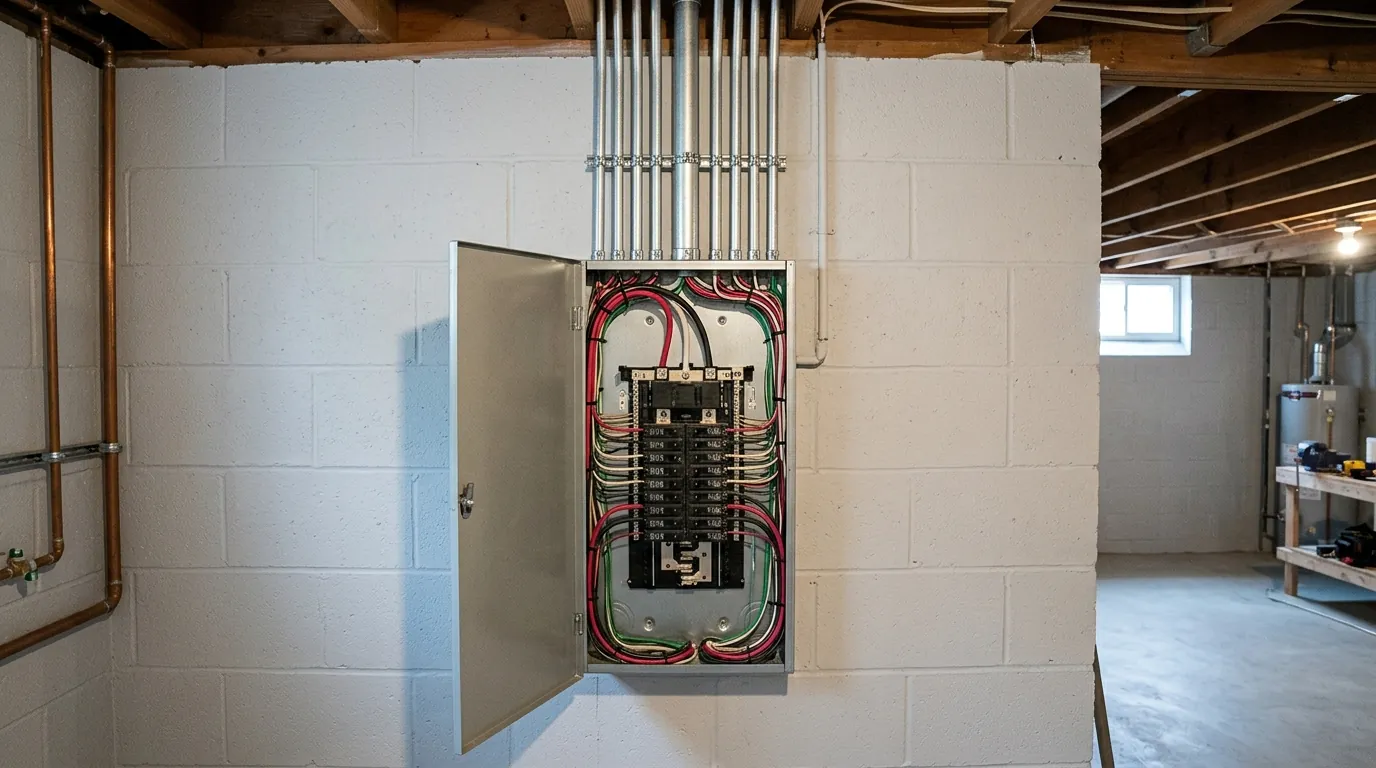
If only a few circuits are still live, replacing just those is reasonable. If the survey finds original wiring across most of the house, a full rewire is often simpler, because every room gets opened once and the new circuits can be laid out for how you live now. Massachusetts has a larger share of pre-1940 houses than most states, so this decision comes up constantly.
Order matters. Do the electrical work before insulation, before new plaster or paint, and ideally at the same time as a panel replacement if the house still has a fuse box. The wiring permit and inspection should close before the insulation crew arrives, since they will ask for proof that live knob and tube was handled.
Where we can help
Knob and tube questions from Boston owners
Existing knob and tube that has not been altered is generally allowed to stay in service. New work cannot use it, and extending or modifying it is a problem. The practical pressure comes from insulation programs and insurers rather than an outright ban.
No. Burying live knob and tube in insulation removes the air it needs to cool, which is why Mass Save treats it as a barrier. The live circuits have to be dealt with first.
Replacing a handful of circuits can take a couple of days. A full rewire of a larger house can run a week or more, depending on access from attic and basement, the number of rooms and how many finished ceilings are in the way.
Not as a simple swap. Without a ground, a three-prong outlet is misleading. The code allows a GFCI-protected outlet labeled no equipment ground as a stopgap, but the better fix is a new grounded circuit.
Usually not. Electricians work room by room and restore power at the end of most days. Expect dust where access holes are cut and some evenings with a few circuits still off.
Keep the closed permit and a written list from the electrician showing which circuits were found live and how each was replaced or disconnected. That is what insulation contractors and insurers usually ask for.