Short answer
Federal Pacific Stab-Lok and Zinsco panels get replaced because both have a long trade reputation for breakers that may not trip when they should. Stab-Lok breakers have tested poorly at shutting off overloads, and Zinsco breakers can loosen and arc against their bus bars. Neither brand was recalled, and many still work, but most electricians and insurers treat them as panels to replace rather than repair.
How to tell whether you have one of these panels
Open the panel door and read the label on the inside, usually on the door itself or on the side of the cabinet. Federal Pacific Electric panels often say FPE or Stab-Lok, and the breakers have a thin red or black handle with a narrow face. Zinsco panels are frequently a pale blue or beige inside, with breakers in bright colors, and some carry a Sylvania or GTE-Sylvania label because that company later sold the same design.
Do not take the dead front cover off to look. The label and the breaker handles are all you need, and a photo of the open door is usually enough for an electrician to identify the brand. If the label is painted over or missing, the breaker style tells the story, and we can confirm it on a visit without opening anything energized.
- Label says Federal Pacific, FPE or Stab-Lok
- Label says Zinsco, Sylvania or GTE-Sylvania
- Breakers that wiggle or sit loose in their slots
- Breaker handles that look scorched or discolored
What the concern with Stab-Lok breakers is
A breaker has one job: open the circuit when the current gets too high. Independent testing over the years found that a share of Stab-Lok breakers did not trip reliably under overload, and some double pole breakers could fail to trip on one side. A breaker that stays on during an overload lets the wire keep heating, which is exactly the situation the breaker exists to prevent.
To be fair to the brand, the federal product safety agency looked into the panels and closed its review without a recall, and plenty of these panels have sat quietly in basements for decades. The trouble is that you cannot tell a good Stab-Lok breaker from a weak one by looking at it, and testing every breaker under load is not a practical homeowner option. That uncertainty is the reason most of them end up replaced.
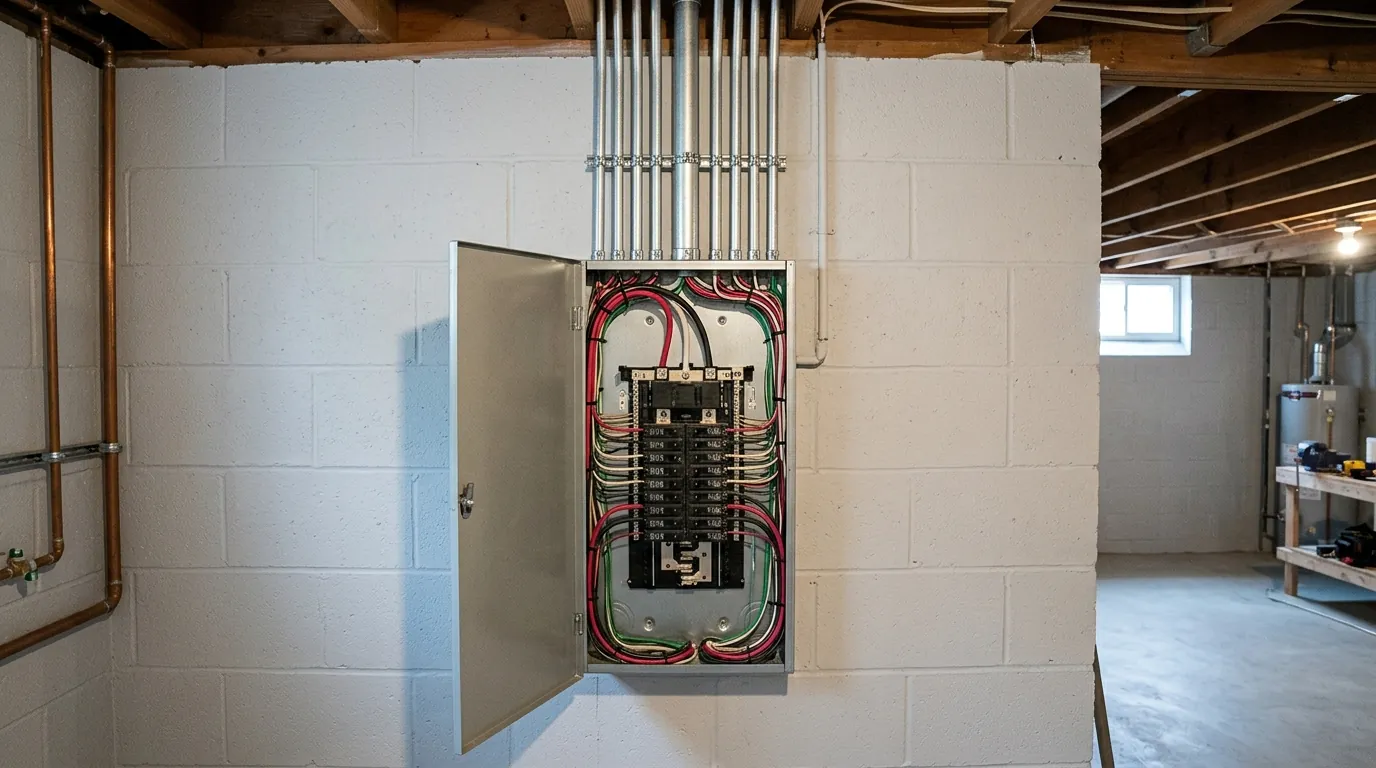
Not sure what brand your panel is? Send us a photo of the open door label and we will tell you.
Call (617) 843-6591Why Zinsco panels draw the same advice
The Zinsco issue is different. The breakers clip onto aluminum bus bars, and over years of heating and cooling that connection can loosen. A loose connection arcs, the arcing heats the joint, and in the worst cases the breaker can fuse to the bus so it no longer trips at all. Warm spots on the cover, a burning smell near the panel or a breaker that looks melted are signs the connection has already been cooking.
Replacement breakers for both brands are hard to find, and the ones sold as compatible do not fix the bus bar or the original design. That leaves a homeowner with a panel that cannot be expanded and is hard to repair, which matters more every year as heat pumps, induction ranges and EV chargers ask more of the service.
Repair, replace or wait: how to decide
If the panel is working, nothing is hot and you are not adding load, the honest answer is that replacement can be planned rather than rushed. If a breaker has tripped and will not reset, a breaker is warm, you smell burning, or you are about to add a big appliance, replacement moves to the top of the list.
Insurance and home sales push the decision too. Some insurers ask about the panel brand when they write or renew a policy, and a home inspector will almost always call out either brand in a report. Replacing the panel before a sale takes it off the negotiation table, while replacing it after you buy lets you size the new panel for your own plans.
What a replacement involves in a Boston house
Swapping the panel means a new cabinet, new breakers and new connections for every circuit, with the utility disconnecting and reconnecting power at the meter. We map each circuit before anything comes out, so the new directory is accurate, and we add the AFCI and GFCI protection the code calls for on the circuits we touch. Massachusetts enforces the 2023 National Electrical Code with state amendments in 527 CMR 12.00, and that is the standard the new work has to meet.
In Boston, panel replacement is work that goes through the city's electrical permit and inspection process at Inspectional Services. In older houses the job often turns up other items, such as a weak grounding electrode, a service cable that has seen better days or ungrounded branch circuits, and you hear about those before anything beyond the panel is done.
What drives the size of the job
No two replacements cost the same, because the panel is only part of the work. The things that move the scope most are listed here, so you can ask about each one when you get a quote.
- Whether the service size stays the same or goes up
- How many circuits need to be moved, extended or relabeled
- Condition of the meter socket, service cable and grounding
- Code updates the inspector expects on the circuits touched
- Access around the panel, such as finished walls or tight basements
Where we can help
Questions readers ask
Most of them have not, and a working panel is not an emergency on its own. The concern is that a breaker may not trip during an overload or short, and you cannot tell which ones are weak by looking. That risk is why replacement is the common advice.
No. Neither brand was recalled. The federal product safety agency reviewed Federal Pacific breakers and closed the review without a recall. The replacement advice comes from testing results, field experience and the lack of reliable new parts.
Replacement breakers for these panels are scarce, and swapping breakers does not address the bus bar or the original design. For a Zinsco panel especially, a scorched bus usually means the whole panel needs to go.
Some do. Certain insurers ask about panel brand on applications and renewals, and some ask for replacement before they write a policy. Check with your agent so you know where you stand.
A straightforward swap is usually a one day job with the power off for part of it. Utility scheduling for the disconnect and reconnect, a service size increase or extra code work can stretch that.
Not always. If you are planning a heat pump, an EV charger or an induction range, a load calculation will show whether the existing service is enough. Doing both at once avoids paying for the panel work twice.