Short answer
A heat pump does not automatically mean a panel upgrade. Whether you need one depends on a load calculation of the whole house, the size of the heat pump and its backup heat, and whether the panel has breaker spaces left. Many Massachusetts houses with 100 amp service and gas cooking take a heat pump on the existing service. Electric resistance backup heat is what usually tips the balance.
What a heat pump actually draws
A ducted or ductless heat pump needs a dedicated 240 volt circuit for each outdoor unit. The nameplate on the outdoor unit lists two numbers that matter: the minimum circuit ampacity, which sets the wire size, and the maximum overcurrent protection, which sets the largest breaker allowed. Modern inverter heat pumps ramp up and down, so they rarely run at nameplate draw for long.
The bigger load is often the backup. Many ducted systems include electric resistance heat strips in the air handler for the coldest nights or for defrost. Those strips can draw more than the heat pump itself, and the code counts them in full. A cold climate heat pump sized to carry the house without strips makes a large difference to the panel question.
Two separate limits: capacity and space
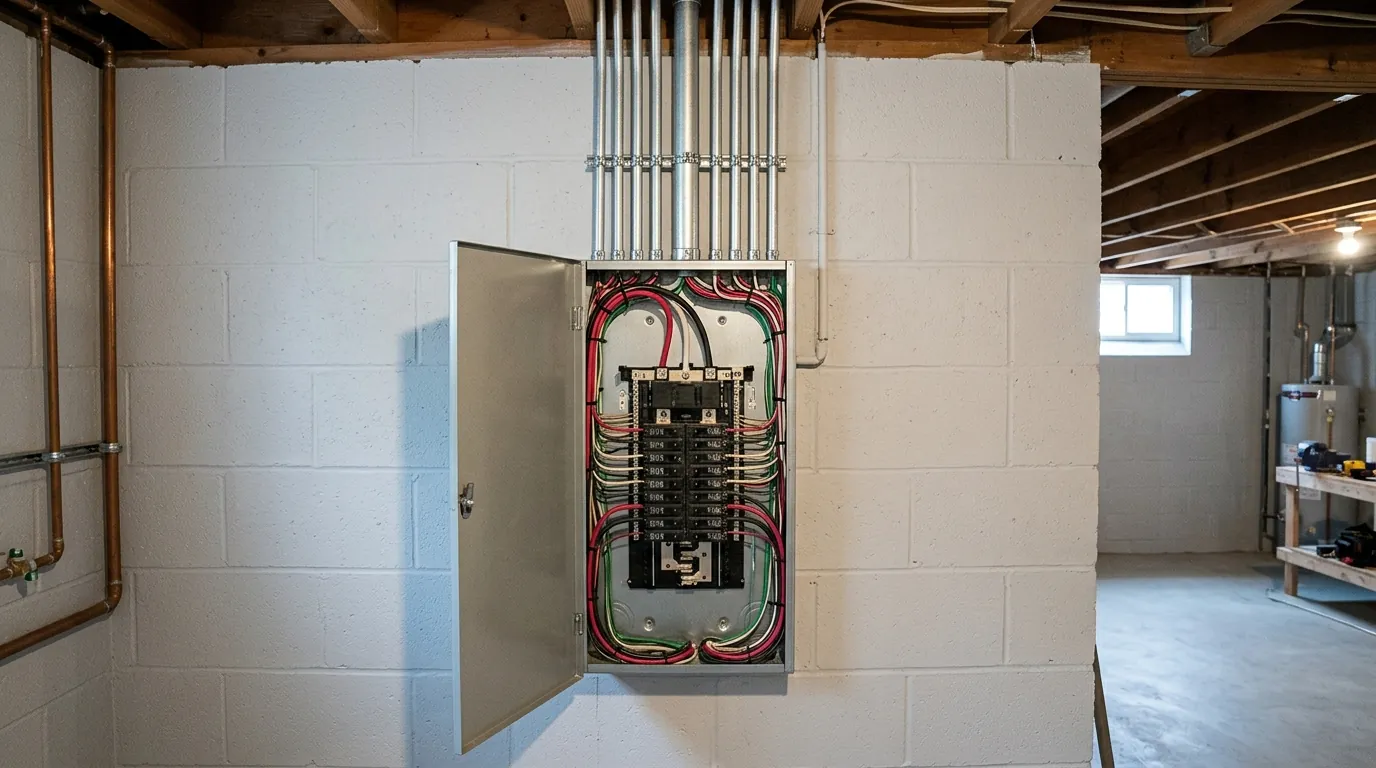
A panel can fall short in two ways. The first is capacity: the total calculated load is larger than the service can supply. The second is space: the panel has no open slots for the new 240 volt breakers, even though the service has power to spare. These have different fixes, and mixing them up leads to upgrades nobody needed.
A space problem can often be solved with a subpanel, by combining lightly loaded circuits, or with tandem breakers where the panel listing allows them. A capacity problem needs either less load, a way to manage load, or a bigger service. Ask the electrician which limit you are hitting before you accept a quote for a service upgrade.
- Capacity: calculated load exceeds the service rating
- Space: no open breaker positions for new circuits
- Condition: an older panel brand or damaged bus that should be replaced anyway
Want the load calculation done before the HVAC order goes in? We answer 24/7.
Call (617) 843-6591How the load calculation is done
Massachusetts enforces the 2023 National Electrical Code with state amendments in 527 CMR 12.00, and Article 220 of the NEC sets out how dwelling loads are calculated. For an existing house adding equipment, the code offers an optional method that applies demand factors to general loads and counts heating and cooling at the larger of the two, not both. Done properly, it often shows more room than a quick count of breaker handles suggests.
Some electricians also look at a year of utility data showing the highest demand the house has actually drawn. That real number, plus the new heat pump and any backup heat, is a useful check on the calculation. Bring your utility account information to the estimate if you can.
Load management instead of a bigger service
When the math is close, load management can avoid a service upgrade. A smart panel or a separate energy management device watches total current and sheds a load, such as an EV charger or water heater, when the house nears its limit. The code recognizes these systems, which lets the electrician count the managed load differently in the calculation.
The trade-off is that something occasionally waits. On a cold evening with the heat pump working hard, the car may charge later in the night. For most households that is not noticeable. If you plan an EV, induction cooking and a heat pump water heater on top of the heat pump, a service upgrade may still be the cleaner long-term answer.
Questions to settle before the equipment is ordered
Most panel surprises on heat pump jobs come from decisions made in the wrong order. The HVAC proposal names a model and a backup heat package, the electrician sees it for the first time on install day, and the panel turns out to be short. A short conversation with both trades before the order goes in avoids that. Bring the proposal to the electrician and ask for a written answer on these points.
If you live in a two family or triple-decker, add one more question: which meter and panel will feed each outdoor unit. A heat pump for an upstairs unit has to come from that unit's panel, not the house panel, unless the building is set up to share it. That decision changes where the outdoor unit can sit and how long the circuit runs.
- Which model and outdoor units, with nameplate MCA and MOP?
- Is electric backup heat included, and at what size?
- Is the limit capacity, space or panel condition?
- Would load management cover the gap, and what would it pause?
- Will other electric loads be added in the next few years?
Incentives and paperwork that affect the order of work
Mass Save offers heat pump incentives to Massachusetts homeowners, and eligibility rules change from year to year. Separately, panel upgrade incentives tied to electrification are offered in Massachusetts in 2026, with eligibility that depends on the program. Some require approval before work starts, specific documentation from the installer, or a particular sequence of jobs. Check the current terms with each program before signing contracts.
Coordinate the HVAC contractor and the electrician early. The heat pump installer chooses the equipment, the electrician confirms the circuits and the panel, and both need the same equipment model numbers. In Boston, electrical work for the new circuits goes through the city's electrical permit process at Inspectional Services, and a service upgrade also requires Eversource scheduling.
Where we can help
Heat pump and panel questions
Often, yes. Many houses with 100 amp service and gas or oil for cooking and hot water can add a properly sized heat pump. Electric backup heat strips, electric cooking and an EV are what push the calculation over.
Each outdoor unit needs its own dedicated circuit sized from the nameplate. Indoor heads are usually powered from the outdoor unit, so one circuit can serve a multi-zone system.
That is a question for the HVAC designer. A cold climate heat pump sized for the house may not need them, which helps the panel a great deal. If they are installed, the electrician has to count them.
A smart panel monitors and controls individual circuits so it can shed load near the service limit. It is one way to avoid a service upgrade, but a simpler load management device sometimes does the same job.
Some HVAC companies wire the outdoor unit with their own electrician, others leave it to you. Either way, the circuits need a permit pulled by a licensed electrician, and the panel question should be settled before equipment is ordered.
Not always. They can be separate programs with separate rules. Check the current terms for each and ask both contractors what documentation they need to provide.