Short answer
Adding a home EV charger in Massachusetts usually means a dedicated 240 volt circuit for a Level 2 charger, sized to the charger and checked against a load calculation on your panel. The electrician pulls a permit, and Eversource customers can look at the utility's residential EV charging program. Program terms change, so confirm current rules before buying equipment.
Level 1 or Level 2: what you actually need
Every EV comes with a cord that plugs into an ordinary 120 volt outlet. That is Level 1, and it adds only a few miles of range per hour. For a driver who parks overnight and commutes a short distance, it can be enough, as long as the outlet is on a circuit with nothing else heavy on it.
Level 2 runs on 240 volts and charges several times faster. It is what most owners install, especially in a cold climate where batteries lose range in winter. The charger's current rating, such as 32 or 48 amps, sets the circuit size. Chargers are continuous loads, so the circuit and breaker are sized at 125 percent of the charger's rating, which is why a 32 amp charger lands on a 40 amp circuit.
Can your panel handle it?
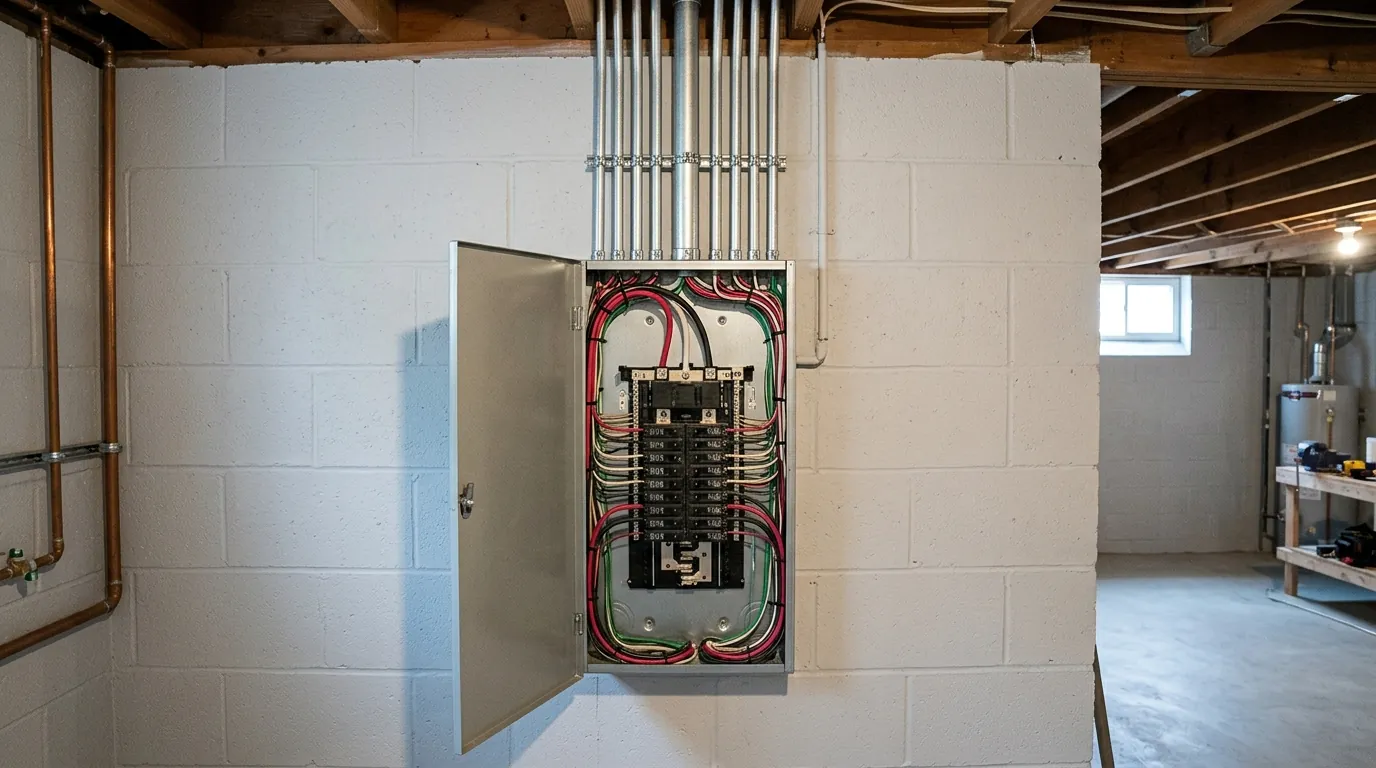
This is the question that decides the price. An electrician runs a load calculation on the house as it is, then adds the charger. Many 100 amp services in Boston houses can take a charger once the math is done, especially if the house heats with gas or oil. Others are already near the limit with electric cooking, a dryer and central air.
When capacity is short, there are options before a service upgrade. Many chargers can be set to a lower current. A load management device or smart panel can pause the charger when the dryer or a heat pump runs. Some chargers also support sharing power between two cars. If the service still falls short, a panel or service upgrade comes first.
- Electric range, dryer and water heater all count against capacity
- Planned heat pumps should be in the calculation now, not later
- Lower charger settings trade speed for capacity
- Energy management systems are recognized by the NEC for this purpose
Have a charger picked out? Call and we will check it against your panel, 24/7.
Call (617) 843-6591Hardwired charger or a 240 volt outlet
A charger can be wired straight to its circuit or plugged into a 240 volt receptacle such as a NEMA 14-50. The outlet looks flexible, but under current code a 240 volt receptacle in a garage or outdoors needs GFCI protection, and those breakers can be touchy with some chargers. Cheap receptacles also wear out under repeated heavy charging.
A hardwired charger avoids the receptacle and usually allows a higher setting on the same circuit. Choose the charger first, read its install manual, and give the electrician the model so the circuit, breaker and wire match what the manufacturer allows. Outdoor units need a rating for wet locations and a cord that reaches the charge port without crossing a walkway.
Getting the wire from the panel to the parking spot
Distance and path drive most of the labor. A detached garage needs a trench or an overhead run. A charger on the far side of the house may need conduit across the basement ceiling and through a foundation wall. In a triple-decker or condo, the charger has to come from the right unit's panel or the house panel, and the path may cross common areas that need the association's approval.
Long runs can need larger wire to keep voltage drop in check. Exterior conduit should be planned for snow, plows and shoveling. If you park on the street with no driveway, a home charger may not be practical at all, and public or workplace charging is the realistic answer.
Placement, cold weather and daily use
Mount the charger where the cord reaches the charge port without stretching, with the car parked the way you actually park it. Check where the port is on the car you drive now and on the one you might buy next. Leave room so the cord can hang without lying in a puddle or across the garage door track. Indoors, keep the unit away from the path of a car door or a snowblower.
Cold weather changes the math more than most owners expect. Batteries charge more slowly when cold, and the car may spend energy warming the pack before charging. Many owners schedule charging overnight and precondition the cabin while still plugged in, which draws from the house instead of the battery. If your utility offers a time-based rate or a managed charging option, the scheduling features in most Level 2 chargers make it easy to use.
- Measure cord reach with the car parked normally
- Keep the cord off the floor and clear of door tracks
- Use scheduled charging to run overnight
- Precondition the cabin while plugged in on cold mornings
Utility programs, permits and paperwork
Eversource runs a residential EV charging program for its Massachusetts customers, and the Massachusetts Department of Public Utilities maintains a page of EV charging programs and resources for residents. Requirements can include qualifying charger models, enrollment before installation and data sharing. Rebate amounts and terms change, so read the current program rules before you buy anything. Danvers and other towns with municipal electric divisions run their own programs.
An EV charger circuit is work that needs a permit, and the electrician pulls it. Massachusetts enforces the 2023 National Electrical Code with state amendments in 527 CMR 12.00, which covers EV equipment and GFCI rules. In Boston, the permit and inspection go through Inspectional Services. Keep the permit and the invoice, because utility programs usually ask for both.
Where we can help
Home EV charging questions
A new 240 volt circuit for a charger is work that needs a permit, and in Massachusetts a licensed electrician pulls it. In Boston, the inspection goes through Inspectional Services.
It depends on the charger. Because charging is a continuous load, the circuit is sized at 125 percent of the charger rating. A 32 amp charger needs a 40 amp circuit, and a 48 amp charger needs a 60 amp circuit.
Not necessarily. A load calculation tells you. Many houses can add a charger as is, and a lower charger setting or a load management device can avoid an upgrade when capacity is tight.
Yes, if the charger is rated for outdoor use. Plan the mounting height, cord reach and conduit path so snow, plows and shovels do not hit them.
It may. Eligibility, qualifying equipment and amounts change, so check the current Eversource program rules before buying. Some programs require you to enroll before the work is done.
Often, but the circuit has to come from the right meter and panel, and the route may cross common areas. Get the association or other owners on board before you buy a charger.